

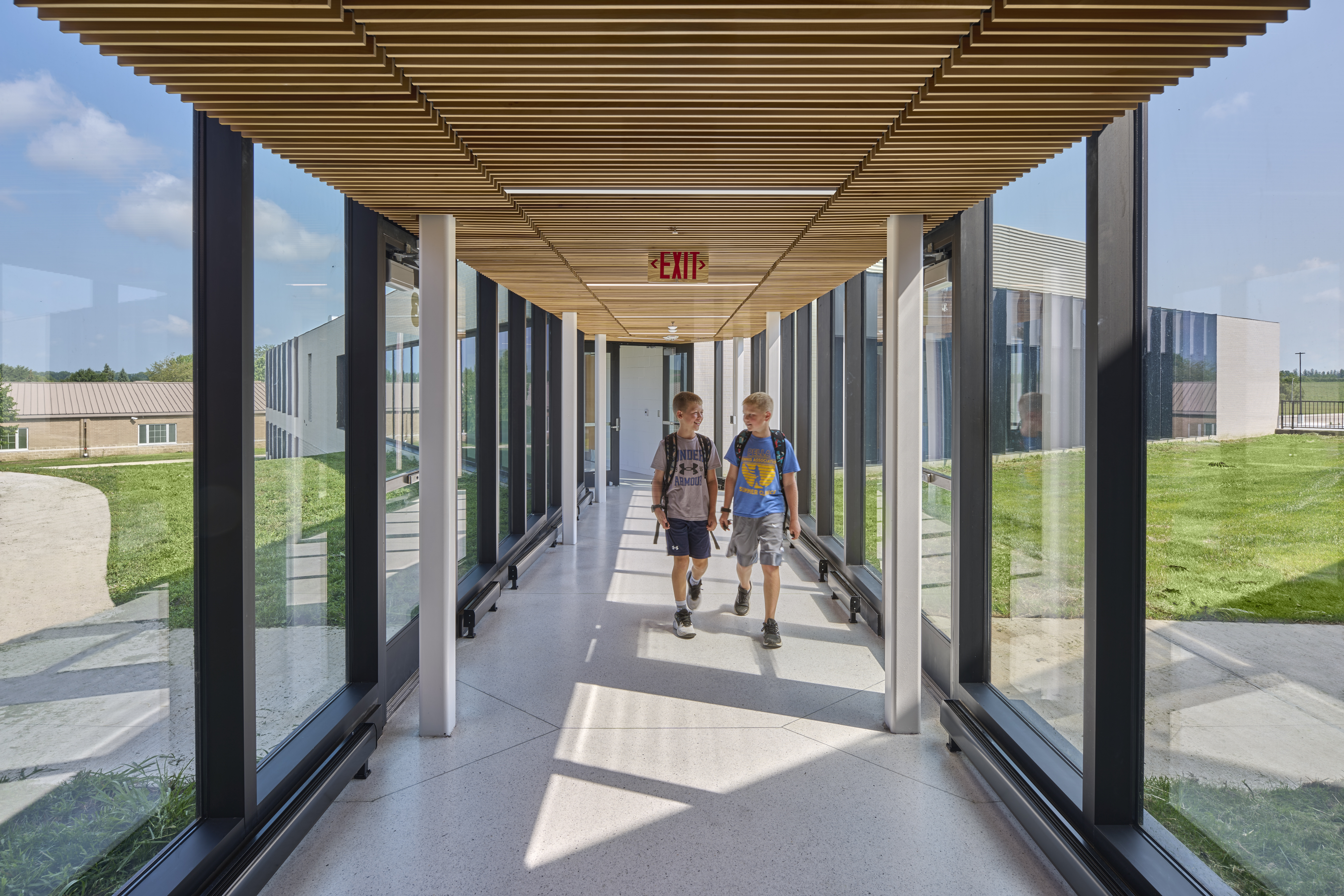

Biophilia is the concept that humans are innately drawn to and connected with nature. When applied to architecture, biophilia becomes a framework for creating spaces that nurture both beauty and well-being.
Comfort, beauty, and inspiration are often the goals of a new space, but sometimes translating these goals into design can be challenging. The abundance of material and color choices can quickly become overwhelming. Biophilic design principles can provide a framework to help clarify the process by grounding decisions in the natural world.
At Neumann Monson, we use this framework to guide our design choices. Our goal goes beyond making spaces beautiful—we focus on building a stronger connection between people and nature. By using natural materials, letting in daylight, and providing access to the outdoors, we create buildings that help people feel happier and healthier.
In this article, we’ll explore the benefits of designing spaces that prioritize biophilia and ways to incorporate it into your next building.
- What are 5 Benefits of Biophilic Design?
- How to Incorporate Biophilia into Your Building
- Designing With Nature in Mind
What are 5 Benefits of Biophilic Design?
Biophilic design is about more than bringing the outdoors in—it’s a science-backed approach to creating environments that nurture our innate connection to nature. Studies show it can improve health, happiness, and performance in settings from classrooms to workplaces.
1. Improved Mental Health and Stress Recovery
Research from multiple universities and hospitals shows that when participants were exposed to auditory and visual biophilic elements, they experienced lower sympathetic nerve activity. In other words, nature-inspired environments foster relaxation and reduce stress. When biophilia is integrated in buildings, it promotes a sense of calm and creates more serene, restorative environments that support mental well-being.
2. Increased Productivity
Exposure to natural environments has been repeatedly linked to improved workplace productivity. The National Institute of Health found that biophilia stimulates creativity, focus, and efficiency within work environments. When a workspace is designed with nature in mind, it becomes more than just a place to work and becomes a place that empowers people to perform at their best.

3. Greater Occupant Satisfaction and Retention
Biophilia not only improves well-being, but it also promotes connection and happiness within a space. When green building and psychology researchers surveyed workers about the presence of natural elements in their workspace, they reported much higher levels of happiness. 67% of respondents felt happy when walking into buildings, highlighting natural colors. By encouraging positive interactions between people and their environment, biophilic spaces nurture a sense of engagement and retention of occupants over time.
4. Better Learning Outcomes in Educational Settings
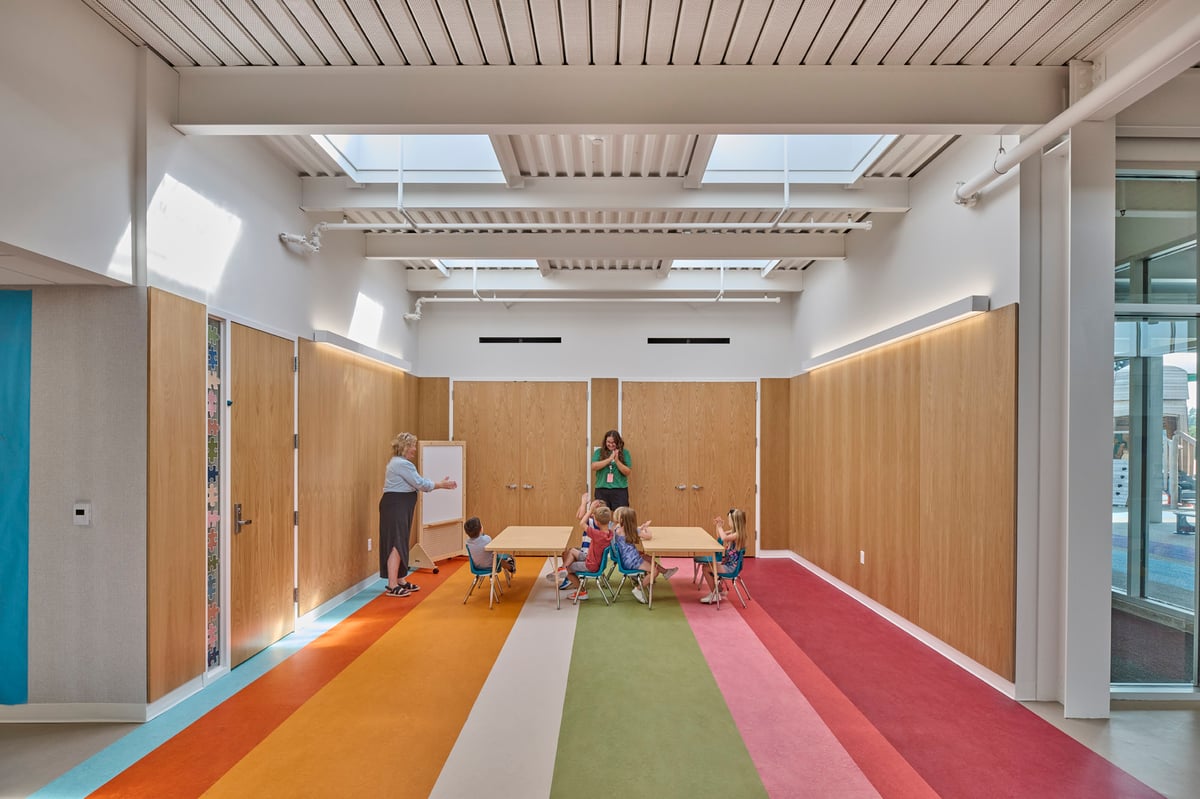
Students and teachers spend roughly 1,000 hours per year in school buildings, making the quality of these environments essential to learning and development. Research from the Green Building Alliance revealed that when classrooms have access to natural light, the outdoors, and other biophilic elements, that students experience greater academic performance on tests and have higher levels of focus. Integrating biophilic design into educational settings creates learning environments that nurture both cognitive growth and emotional balance, helping students thrive academically and personally.
5. Improved Healing/Recovery in Healthcare Settings
A collective study on the health and well-being impacts of biophilic design in healthcare settings found a reduction in pain levels, patient deaths, stress among healthcare providers, and hospitalization time. These results indicate that healthcare facilities can be more successful when they prioritize nature in their design.
How to Incorporate Biophilia into Your Building
Wondering how to bring the benefits of biophilia into your next building? Biophilic design can be supported through a few simple yet effective design strategies to help people feel more connected to nature and improve their overall well-being.
One of the first considerations is orienting buildings to capture optimal daylight and views all year round. By prioritizing natural light and thoughtfully placing windows, there’s a reduced need for artificial lighting, allowing the sun to provide passive warmth during the cold winter months. This creates environments that are both energy efficient and uplifting.
Another key approach is blurring the boundary between indoor and outdoor spaces to create a direct connection to nature. Features such as patios, courtyards, and terraces give building occupants easy access to the outdoors, while interior greenery helps bring nature inside. Plants placed throughout a space not only reinforces this connection to nature but can also contribute to improved air quality.

Natural materials and color palettes also play an important role in creating warm and inviting spaces. Materials like wood, stone, and even organic textures help to create spaces that foster a tactile connection to nature.
Designing With Nature in Mind
Beyond its beauty, biophilic design demonstrates that when nature is incorporated in our spaces, building occupants feel happier and healthier—decreasing stress, boosting thinking, and even improving recovery time in hospitals. So, as you plan your next building, consider how biophilic design can make your building more comfortable, productive, and motivating.
Now that you understand the benefits of biophilia, explore the principles of biophilic design to discover how you can thoughtfully shape a healthier, more inspiring building.