

Waste is inevitable for a business. But when approximately 58% of landfill waste can be recycled or composted, proper disposal can make a meaningful difference in a business's impact on the environment. However, without the raw data on your waste output, you can’t know how effective your current recycling and composting efforts are, nor do you have the information to aim your efforts in the right direction.
This is where a waste audit becomes helpful. By getting a snapshot of your office’s waste output and habits, you can more effectively diagnose issues and identify opportunities for more eco-friendly ways to process your office’s waste.
But what is a waste audit? Who performs one? This video and article will discuss exactly how you can perform your own waste audit, what you can learn, and steps you can take with the info going forward. (And we promise it’s easier than you think.)
Who Can Do a Waste Audit?
Any company can do a waste audit, and the information is invaluable for your waste reduction efforts going forward. All it requires is a space to perform the audit, a scale, some protective gear, and a group of employees with a dedication to reducing your company’s landfill contributions. If you have these things, you can do a waste audit.
At Neumann Monson, we have a dedicated Green Team that researches and implements processes to further our firm’s sustainability goals. This team is made up of volunteers that meet regularly and work together to help our office be more sustainable. This is the team that performs our waste audits.
Your company is welcome to assemble a Green Team as well, but it’s not required to perform a waste audit. A waste audit just needs enough people to manage the waste, sort and weigh it, and record the results. A single person could feasibly manage this in a smaller office, but the process will take longer. Putting a group together (preferably on a volunteer basis) not only speeds up the process but brings your coworkers together in a shared goal for improvement. This shared goal is one of the unseen benefits of a waste audit; it makes people aware of their habits and gives them the power to directly influence the improvement.
How To Perform a Waste Audit
A waste audit is a relatively simple process, but it does require some planning. There are steps that are not easily reversible once they are performed, so make sure you read the full article before you start. Dumping all your garbage on the ground and not knowing what to do next is an unfortunate position to be in.
Step 1: Gather the Bins
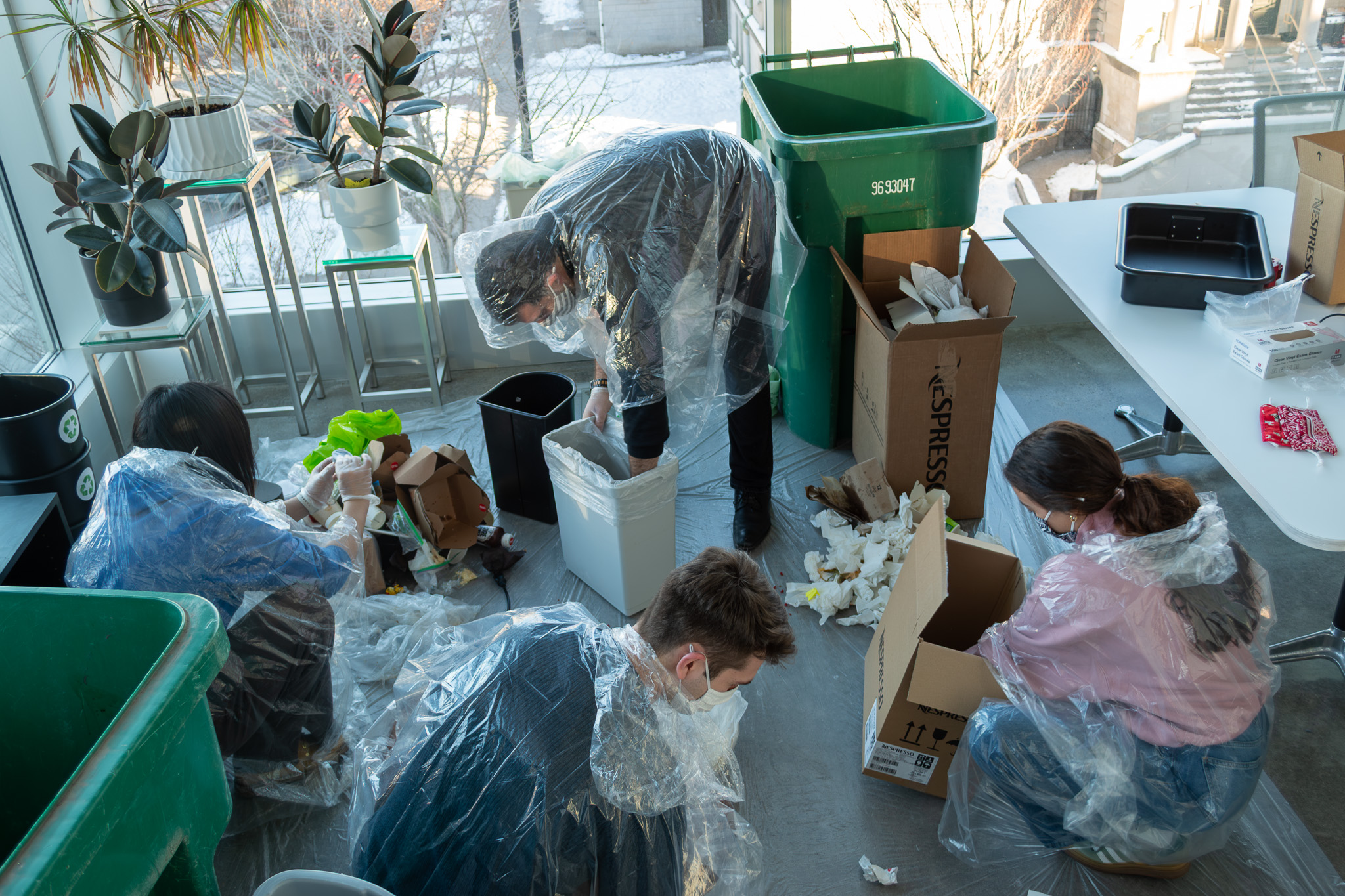
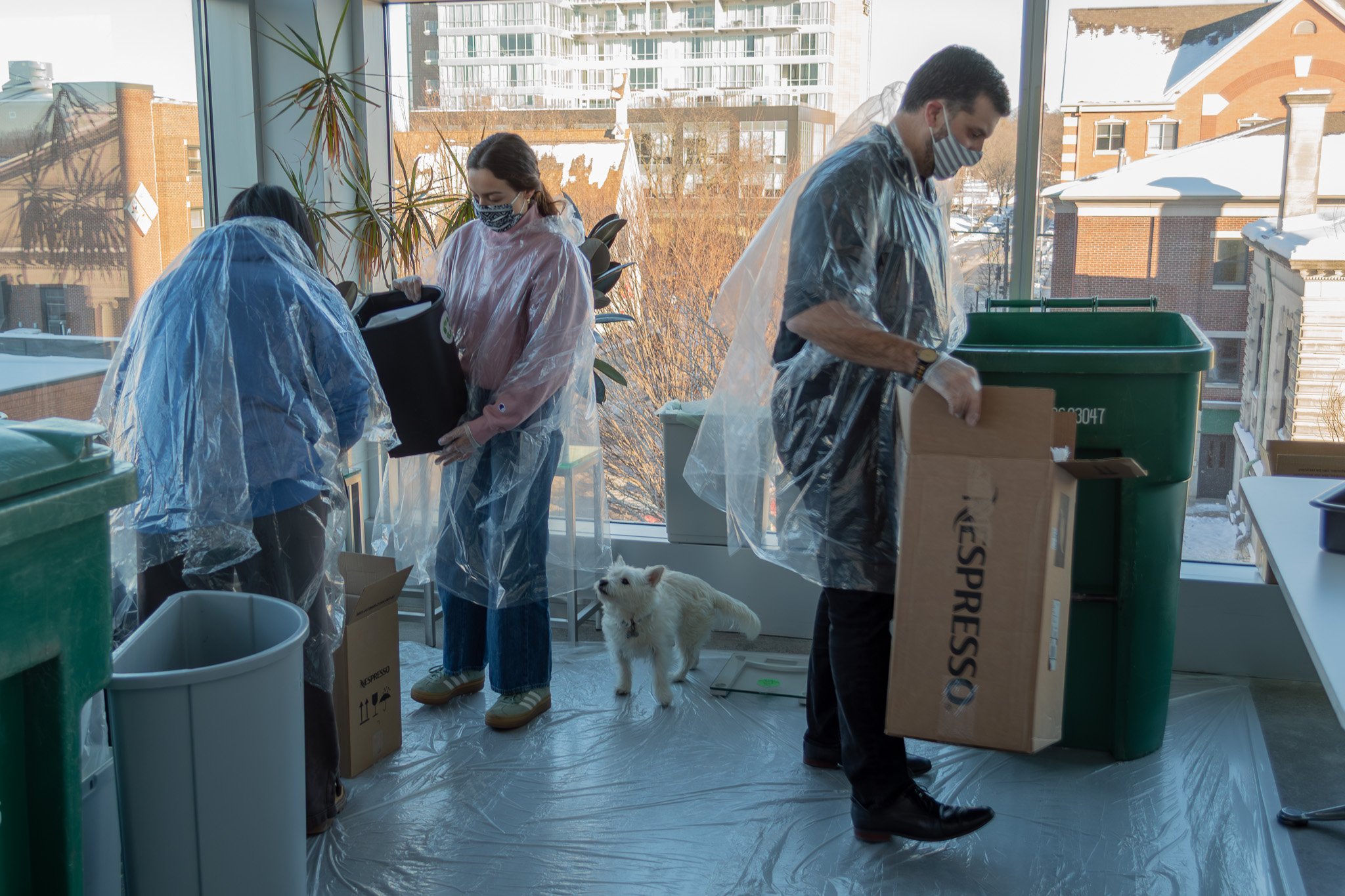
Before handling any waste, make sure you have personal protective equipment to avoid exposing yourself to germs. Our team used rubber gloves, plastic ponchos, and cloth masks.
Gather all receptacles for your waste in your office: trash, recycling, and compost if you have it. Tell as few people as possible about the exact day and time you’ll audit. If you tell everybody when it will occur, you won’t be getting an unbiased sample. Pick a time you know there will be a recordable amount of trash; avoid the day after garbage day if you can.
Your waste should ideally be gathered at the same time, as the volume of waste should be a snapshot of a single moment in the office. You’re comparing the ratio between landfill waste, recycled waste, and compost, so gathering it at the same time will give you the most accurate measurements, regardless of the exact date and time you pick.

Step 2: Measuring and Sorting
Now that you’ve gathered the waste, you’ll measure the weight of waste that was destined for the landfill. Take out all the waste from each landfill bin, combine it, and weigh it. This is your starting landfill volume.
Repeat with recycling and compost.
Now, you’ll sort through the landfill-destined waste and take out all the recyclable material and compostable material (if you compost). Place the waste with the correct disposal category.
Do the same with your recycling and compost, sorting out the incorrect waste and putting it with the correct pile.
While you sort, make notes on what is incorrectly sorted. Is there a certain compostable paper towel that keeps getting put in the trash? Is there a type of non-recyclable food box being placed in the recycling?
Now that you have the waste correctly sorted, weigh each category again and note the differences. Subtract the ending weight of each category from the starting weight. This difference will give you the data you need to begin making adjustments to your office’s waste habits.

Step 3: Interpreting the Data and Making Changes
In a perfect world, the starting weight and ending weight of every category is the same number, and no sorting is needed. However, unless every piece of waste in your office is scrutinized before being disposed, you likely have some difference in the starting and ending weights.
If subtracting the ending weight from the starting weight results in a positive number, that means your office is incorrectly disposing waste into this category. If your final difference for landfill garbage is positive, for example, you may be placing recyclable papers or cardboard in the garbage.
If your final number is negative, that means you are placing waste destined for this category in other receptacles. If the final difference for your compost is negative, you may be placing coffee grounds or other food in the garbage instead of the compost.
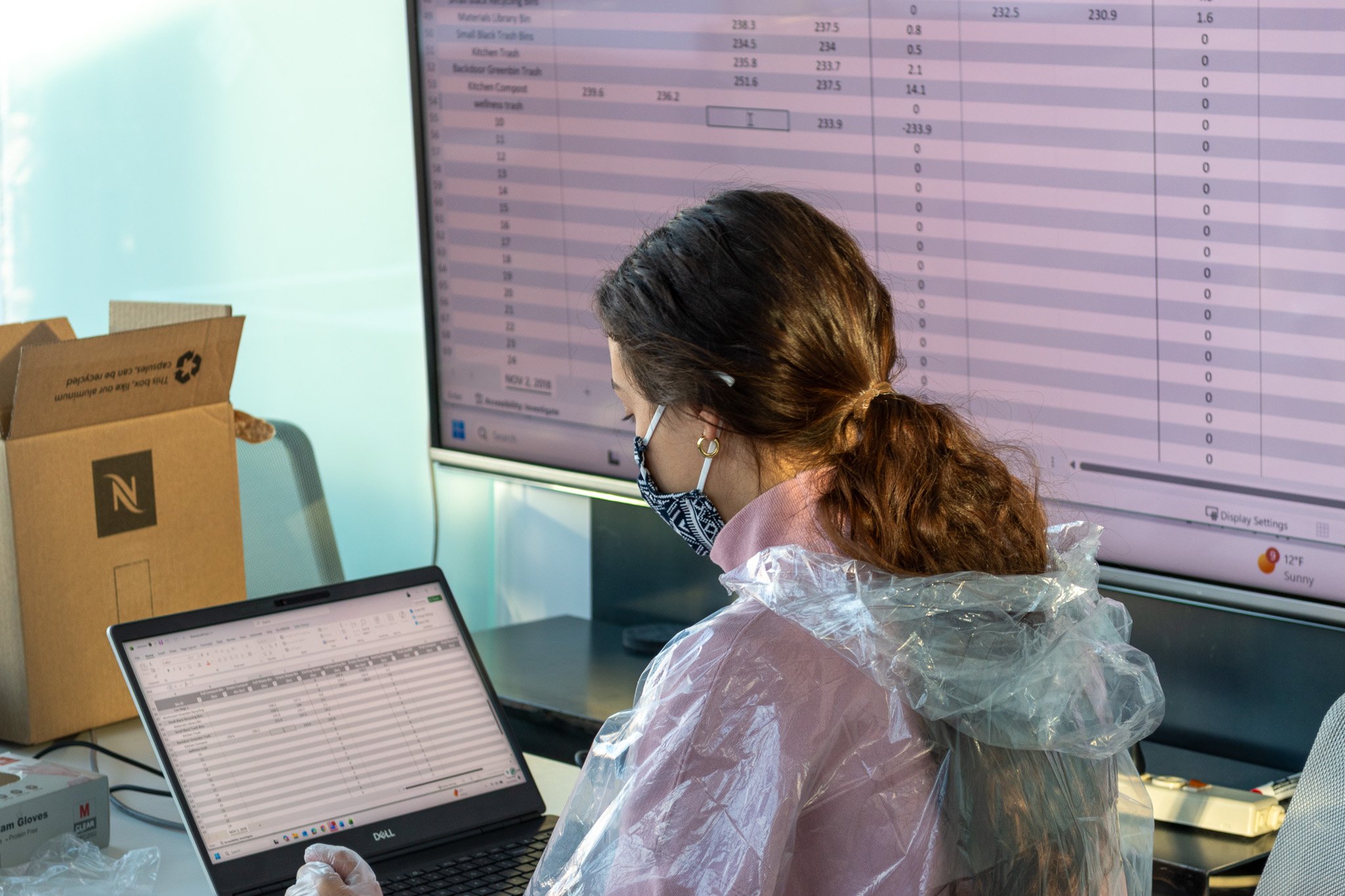
Comparing these numbers with the notes you’ve taken from the sorting, you can start to put together a good idea of your office waste habits. While there are bound to be small variations in weight from start to end, significant differences it may show that certain materials are confusing to dispose. For example, certain plastics might seem to be recyclable but are not, leading to misplaced waste and a higher difference between your landfill pre- and post-sort.
Large differences could also mean unclear marking of receptacles, or possibly inconvenient placement. The common placement of waste bins next to desks could result in discarded paper and the day’s lunch scraps ending up in the same waste stream if other methods of disposal aren’t easily accessible.
Luckily, these issues are easily remedied with more prominent signage, convenient placement of waste bins, and clear instructions on what can and cannot be recycled and composted. Something as simple as a sign in the kitchen that clarifies where commonly confused food items are properly disposed could be an easy and effective way to reduce improper disposal.
There won't be a one-size-fits-all solution to improving your office's waste habits. That's why the waste audit is so helpful: it gives you real numbers that can help create a plan that's right for your people.
Encouraging Sustainability
A waste audit is just one way that you can enhance your business’s sustainability. For more information about sustainable workplaces, check out Neumann Monson’s sustainable practices on our learning center. And if you’re interested in making your own workplace more sustainable through architecture, check out our award-winning projects that prioritize sustainable design.