

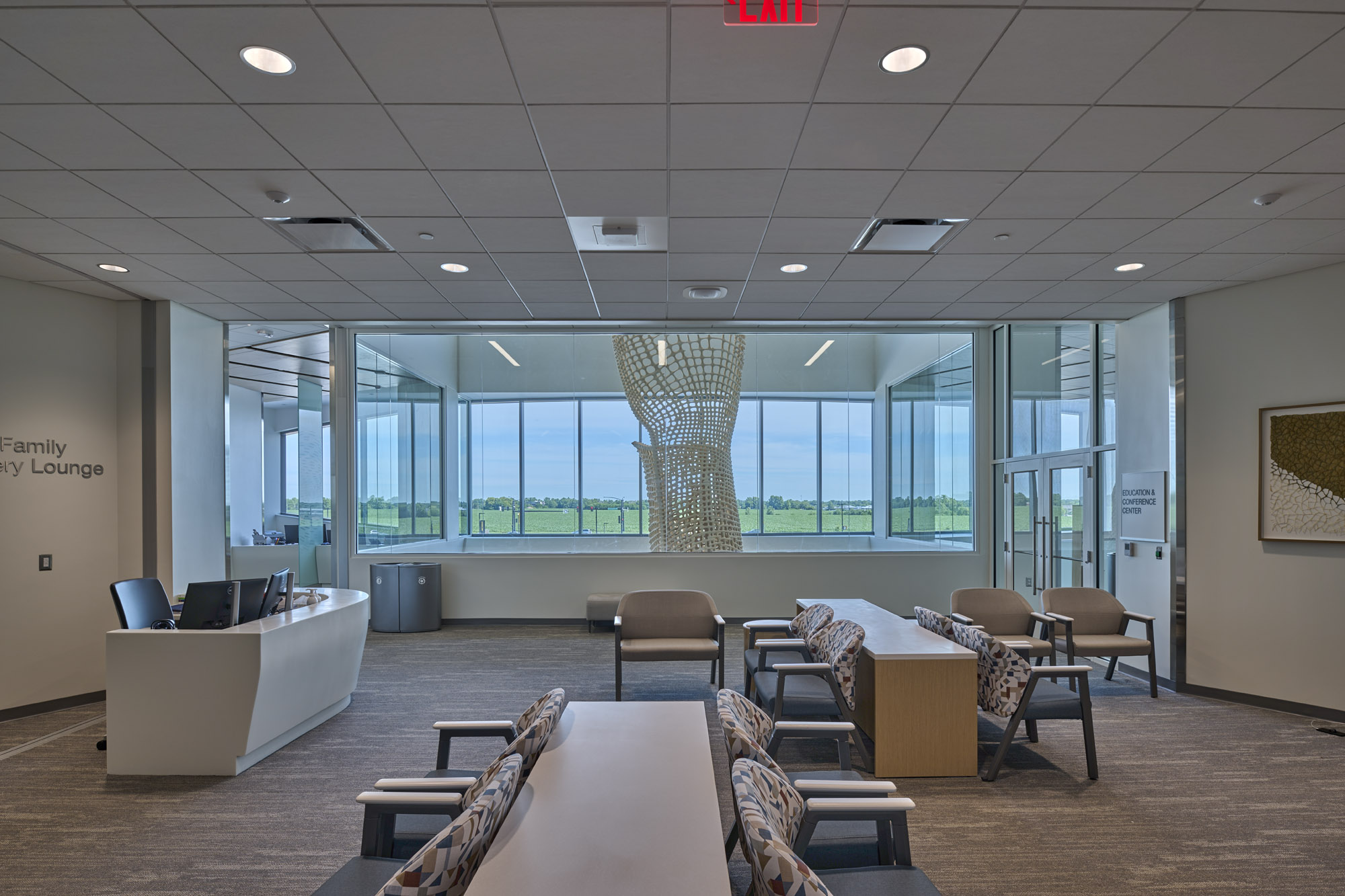
When we think about the ways we can reduce stress, we often focus on our actions: taking deep breaths, going for a walk around the block, or listening to our favorite music. But the spaces we occupy also influence our stress levels. Thoughtful, stress-reducing architecture can create calmer, more pleasant experiences within a building without the occupants even noticing.
Throughout a design project, the psychology and senses of occupants should always be considered. How do people feel when they’re in this space? What do they want from it? What could help them feel better?
This means that the most expensive flooring or the brightest lights available aren't necessarily the elements that will have the greatest positive impact on the people within. Often unseen elements, such as temperature, noise level or even pleasant (or unpleasant) smells, can play a much stronger role in shaping experience.
This article will explore the many options you have to create welcoming spaces that reduce occupant stress.
Stress Reduction of Biophilia
Biophilia is a topic we frequently discuss at Neumann Monson. Biophilic design incorporates elements of the natural world into the architecture and décor of a building. The goal is to evoke the naturally calming effects of nature through forms and materials that resemble natural features, as well as allowing living elements, like plants, to thrive within a space.
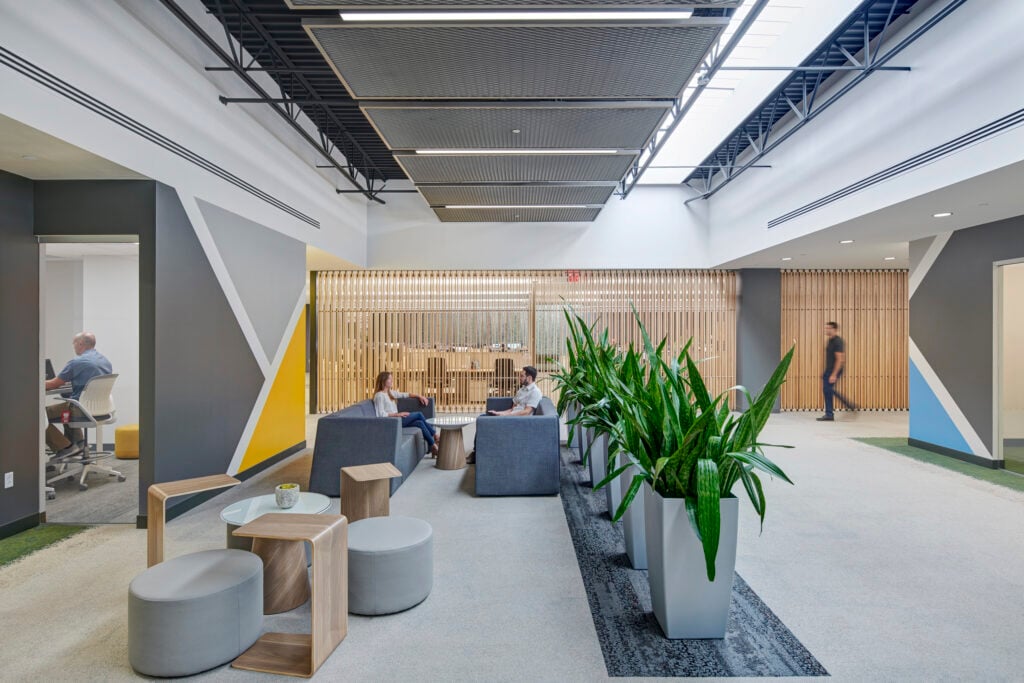
The reason we talk about biophilia so much is because it is a design approach with few drawbacks and many potential benefits to mental health. Biophilic design includes using natural materials and fractals (repeating patterns found in nature, like veins on a leaf), which according to this research article, are designs that can increase occupant wellbeing.
Additionally, several building standards like WELL and the Living Building Challenge consider biophilic elements when evaluating projects These frameworks prioritize occupant health and wellness and can serve as valuable guideposts during the design process. As the biophilia movement grows, we will likely see more features in architectural design that incorporate elements of the natural world to reduce stress.
Stress Reduction of Light
The amount of light in a building can drastically alter the amount of stress for its occupants. One study found that increasing the amount of light in an office lead to improved vitality, productivity, and sleep quality. Access to natural light helps us feel secure and oriented. Very bright, clinical lighting can have the opposite effect, as we often associate this with uncomfortable or stressful environments. That’s why the type and context of light is just as important as the amount of it.
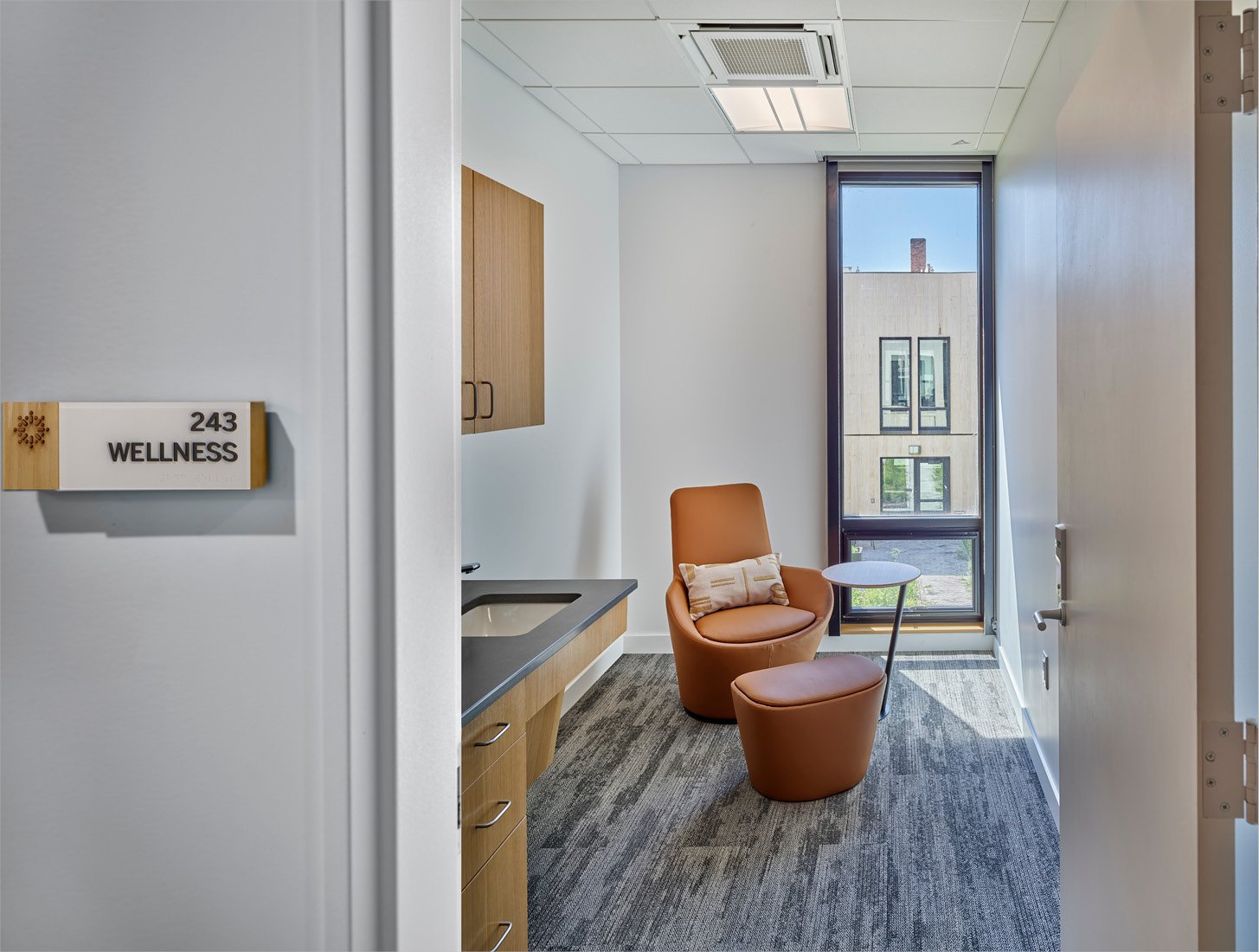
Sunlight is generally seen as the most preferable way to light a building, as it is cost-efficient and can be more welcoming than artificial light. If you want to raise the amount of natural light in your building, you can opt for skylights or increase the size of your south-facing windows.
Because most buildings operate beyond daylight hours, electric lighting is also essential. Color temperature plays a critical role in how a space is perceived. Warmer light is often experienced as more comforting, though it can also make spaces feel dimmer.
Finding the right balance between visibility and comfort depends on how the building is used and what occupant expects. When expectations align with the experience of a space, people tend to feel more at ease. For example, a trendy restaurant may intentionally use dim, moody lighting, while a bank may rely on brighter, cooler lighting. Both approaches can be successful when they align with user expectations, contributing to a more welcoming and less stressful environment.
Stress Reduction of Good Wayfinding
When entering a building, what feels less stressful: clearly labeled spaces with intuitive circulation or unmarked corridors that leave you feeling lost? Effective wayfinding has a significant influence on how comfortable and confident occupants feel.
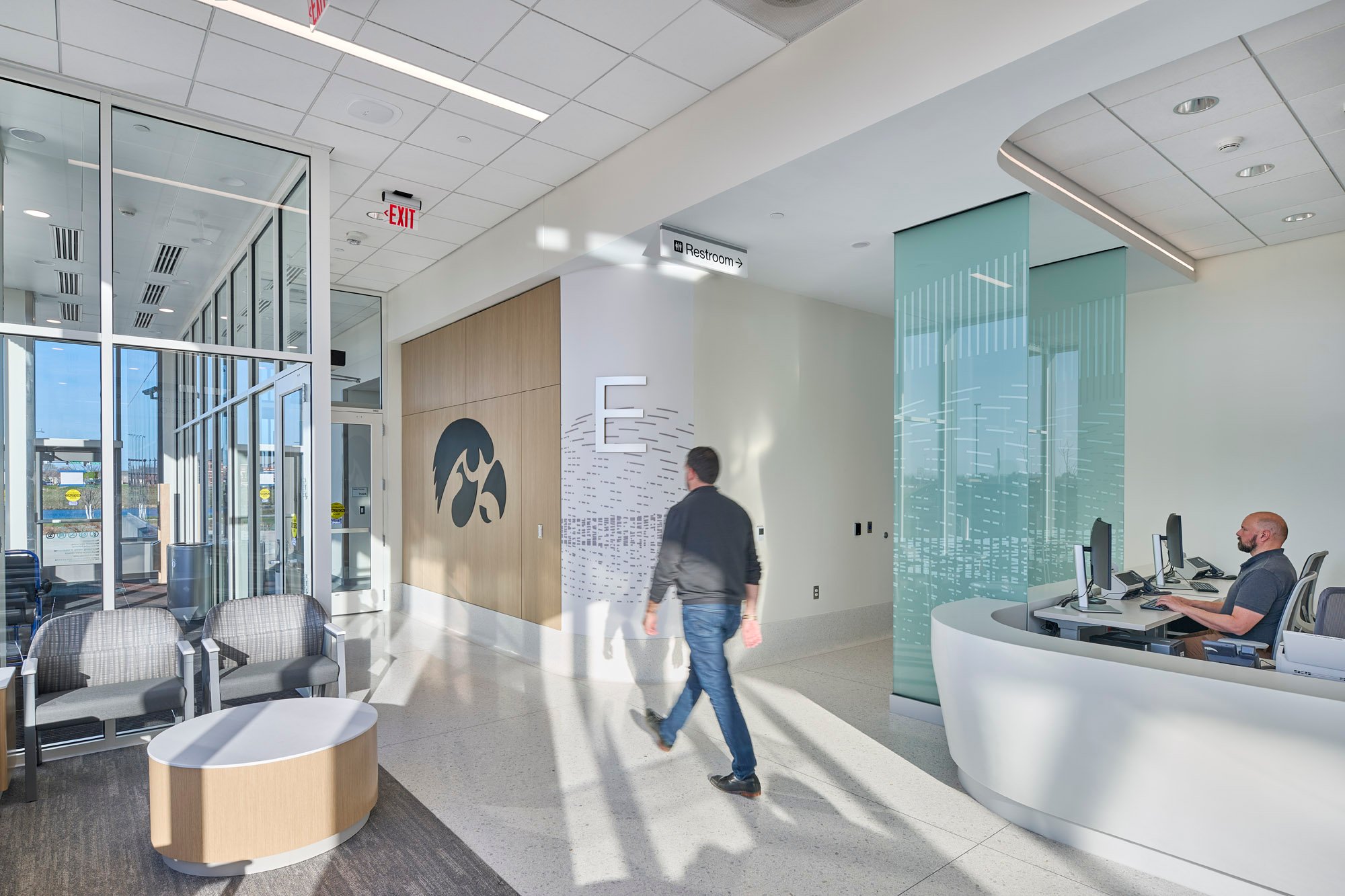
Elements such as wall color corridor alignment, and room placement all contribute to intuitive navigation. Well-designed spaces allow users to orient themselves naturally, using visual cues and spatial logic rather than relying solely on signage. Ideally, a user should feel as though they know where to go, even in a space they've never visited before.
Good wayfinding supports a clear and logical flow, allowing occupants to access key destinations without confusion or assistance. In some cases, navigation can be so intuitive that signage becomes secondary. For example, UIHC Forevergreen Road uses materials to distinguish different areas of the building to assist with wayfinding without ever looking at a sign. Environments like hospitals, where stress levels are already high, benefit greatly from these strategies.
Getting Started With Your Own Design
Designing buildings that reduce occupant stress offers wide ranging benefits from improved employee retention to increased customer satisfaction. If you’re ready to create a project that prioritizes wellbeing and reduces stress for its occupants, we invite you to schedule a meeting with our team. We can help you design spaces that support comfort, clarity, and health for every user. To learn more, you can explore our work and check out our article on trauma-informed design.