

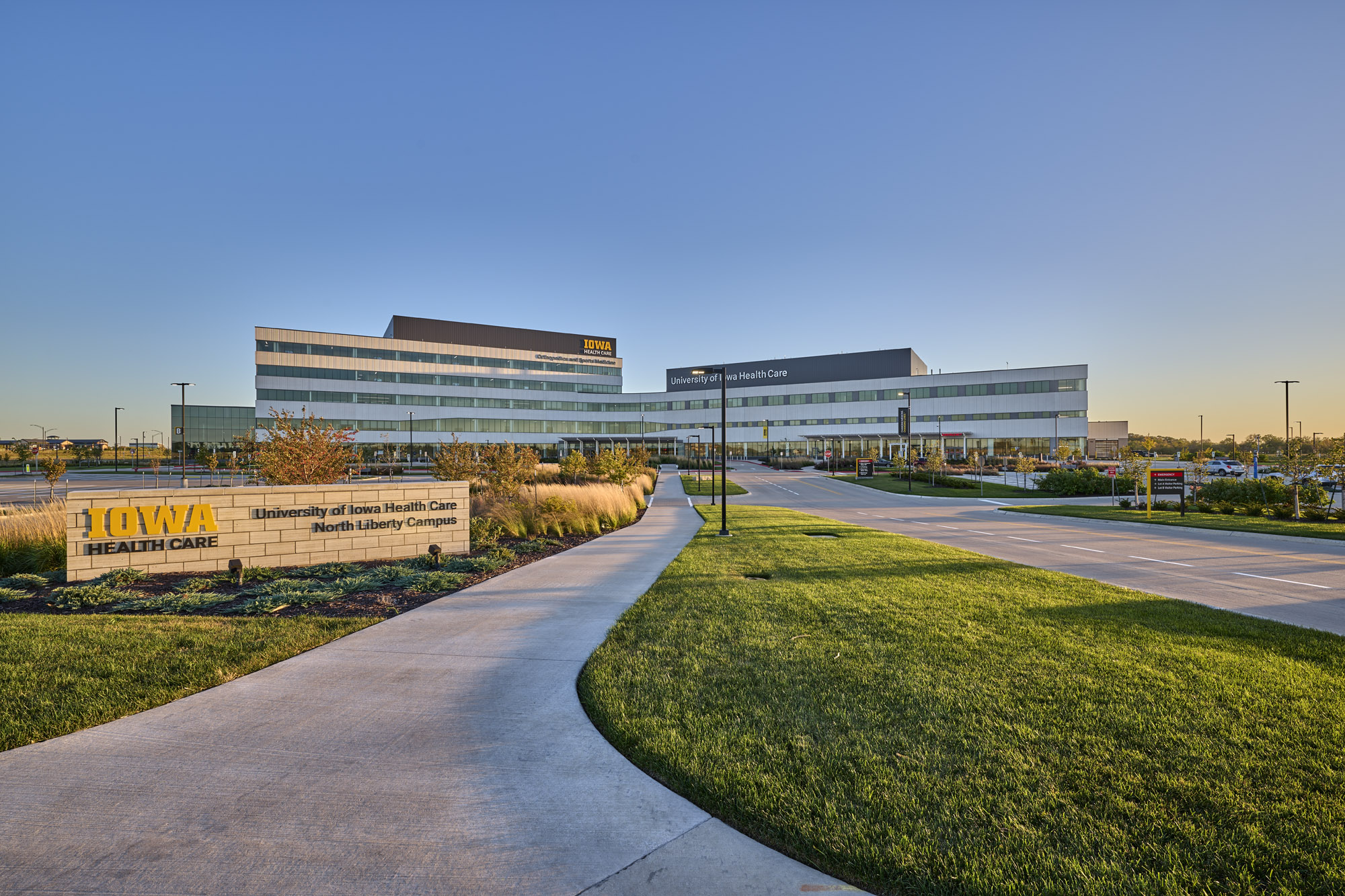
Hospitals have the potential to serve as much more than places where medical care is delivered. When thoughtfully designed, they can function as community resources—supporting patient and staff well-being, strengthening local connections, and contributing positively to their surrounding environments.
The University of Iowa Health Care’s North Liberty Campus demonstrates how hospitals can do more than deliver care through effective design strategies focused on the following:
Human Experience
In healthcare design, prioritizing both patients and staff is essential. Supporting healthcare providers—mentally, physically, and socially—creates the conditions for better care, ultimately strengthening patient outcomes.
The North Liberty Campus was designed around the belief that supporting caregivers is foundational to supporting patients. An onstage/offstage approach helps separate visitor spaces from team member spaces, allowing staff to recharge. Space for staff restoration is supported through access to daylight, healthy amenities, and dedicated spaces for physical and mental well-being.
For patients, design priorities included abundant natural light and views, intuitive wayfinding, varied seating options, and accessible environments. Biophilic design elements were woven throughout the facility, creating a sense of calm and connection to nature that benefits both staff and visitors, ultimately supporting the healing process.
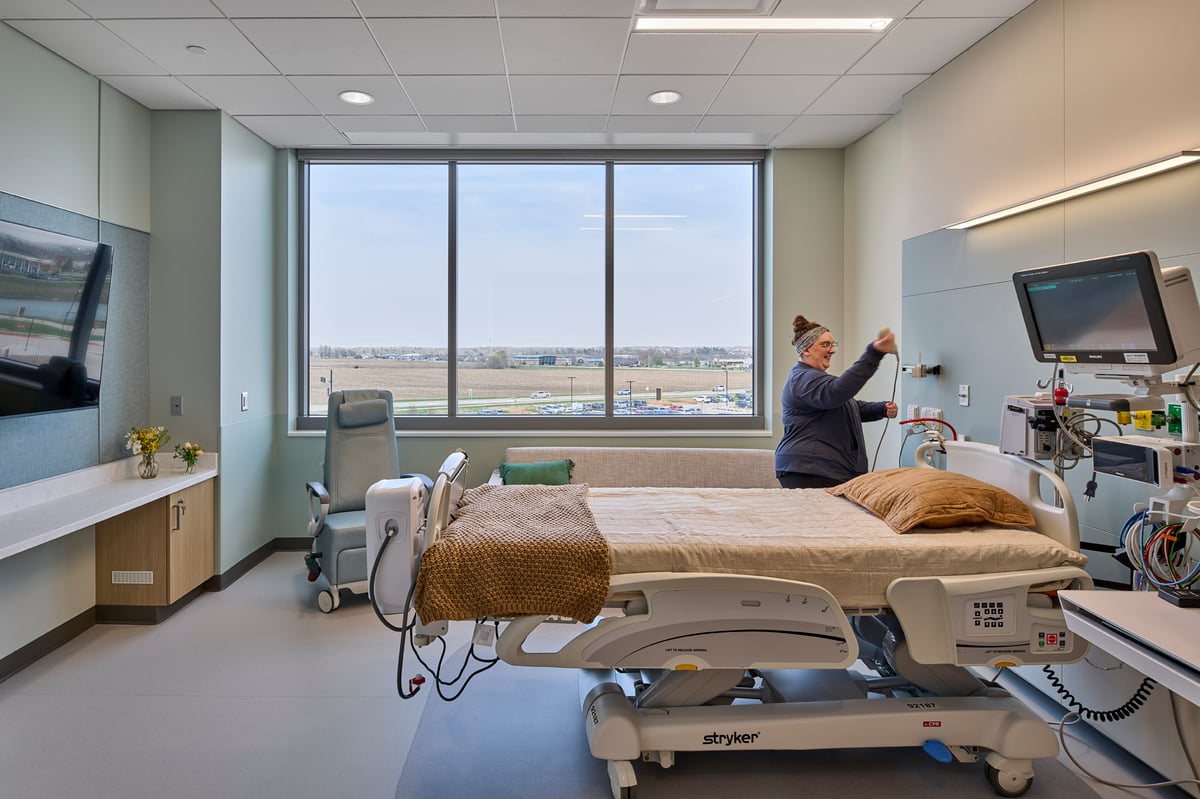

The facility serves all members of the community, including underserved and vulnerable populations. Guided by its tripartite mission—patient care, research, and provider training- the design prioritizes inclusivity at every level.
When considering healthcare building occupants, it’s critical to consider all those who the design may affect. Anticipating these needs generates more nurturing and effective spaces to deliver the best care possible.
Community-Centered Location
Hospitals serve people from a wide range of backgrounds and are deeply rooted within their communities. That means the right project site is crucial for providing accessible healthcare.
One of the primary goals of the North Liberty Campus was to expand healthcare services into the suburban and rural areas of Johnson County, helping reduce overcrowding at the other hospital campuses. By diverting ambulatory services from the congested main campus, the project improves access and efficiency.
On-site public spaces invite people to gather, reinforcing the hospital’s role as a community resource rather than an isolated destination. The site’s proximity to grocery stores, restaurants, and everyday services, along with connections to bike trails and future public transit, further integrates the campus into daily community life.
As communities continue to grow and change, healthcare facilities that respond to their context play a critical role in supporting more accessible, connected, and resilient places of care.
Stormwater Management
Responsible stormwater management is critical for all buildings, not just healthcare campuses. Effective strategies reduce flood risk, limit pollutants, and protect local ecosystems.
The North Liberty Campus is fortunately not located in a floodplain, which significantly reduces long-term risk. However, it has two ponds and biocells that capture, detain, and pretreat stormwater before being outlet to a nearby stream.

Additional measures, such as water quality units utilized for parking lots and decontamination tanks used to treat water prior to entering the sanitary system, further ensure the safety of building occupants and the local ecosystem. Large areas of the site feature native prairie vegetation, reducing the need for sod, irrigation, and long-term maintenance.
By prioritizing stormwater management and ecological stewardship, projects minimize environmental impact while supporting the health of the broader community.
Durability and Change
Hospitals function as long-term community infrastructure, making durability, adaptability, and flexibility essential considerations in design.
The North Liberty Campus prioritizes longevity using durable materials and space for expansion. Materials with a projected lifespan of 100 years were chosen to support both long-term financial sustainability and the building's quality over time. Additionally, redundant water source lines enhance water system resilience during emergencies or supply disruptions.
The facility’s steel-framed structural system allows for flexibility and modification over time. Planned horizontal expansion areas adjacent to the building enable the campus to grow by up to three times its current size, accommodating evolving services and community needs.
Hospitals must be prepared to adapt alongside the communities they serve. Designing for change ensures these facilities remain effective, relevant, and resilient for decades to come.
The Future of Hospital Design
Designing hospitals that go above healthcare sets a higher standard for the industry. By addressing factors ranging from staff well-being to environmental stewardship, healthcare facilities can become meaningful, lasting community resources.
The University of Iowa Health Care North Liberty Campus demonstrates how intentional design can expand the role of hospitals—creating places that support healing, connection, and resilience.

Before planning your next healthcare facility, consider how a more intentional, holistic approach can better serve your staff and patients.