

If you're looking to give your music education program space to grow, a new facility is a great place to start. A good building can give students a free-thinking space to make great art and offer them the resources to practice and grow their skills, while giving them educationally-focused areas to attend lectures and complete coursework. But with the variety of musical instruments, genres, and areas of study, how can you effectively distill all these needs into a single structure?
Using the University of Iowa's Voxman Music Building as a case study, let’s break down the keys to visioning, planning, and constructing a great place for budding musicians. (The Voxman Music Building was created in collaboration with Neumann Monson Architects and LMN Architects.)
Starting With a Clear Vision
As with any building design project, a music education facility should start with a clear direction on what kinds of activity the building will support and how these activities will be facilitated through the design.
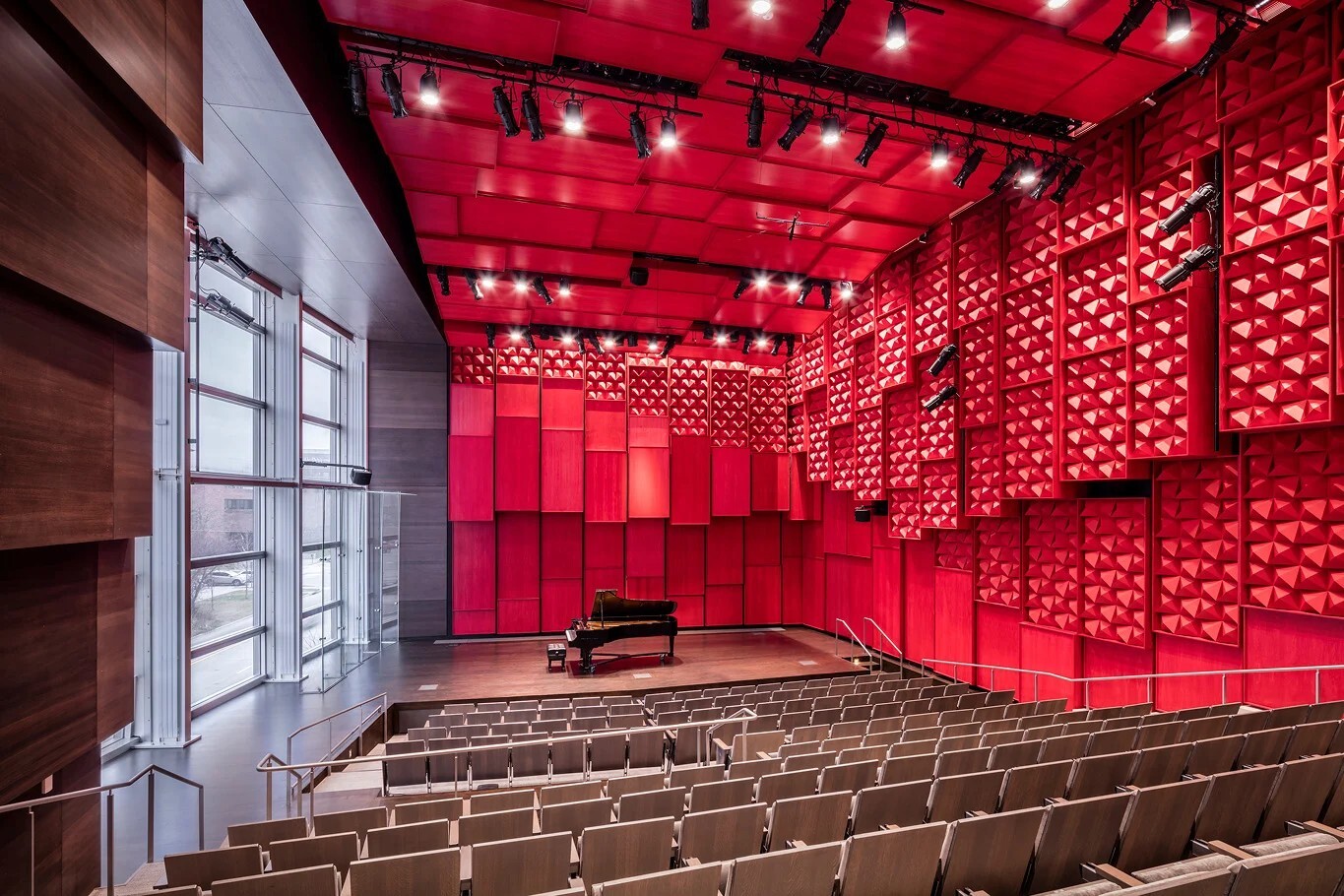
The #1 client goal on this project was for great accoustic performance. Voxman includes a 700-seat concert hall, a 200-seat recital hall, an organ performance hall, a music library, rehearsal rooms, practice rooms, classrooms, faculty studios and offices. Features become prioritized when they address the needs of the client. For your visioning meetings, you should bring the same level of depth, awareness, and imagination about the activities that will take place in your building.
For best results, don’t just predict how people will use the building; brainstorm how the space can encourage occupants to interact with the building in a certain way. Voxman’s concert hall is an open invitation to host events that share students’ music with the people of Iowa City, and the many soundproof practice rooms in the hallways support free experimentation and study. Anticipating usage like this during visioning will set you on the right course for your entire project.
The Spaces Between the Notes
While places to practice and learn are important, a great music education building also supports what happens between structured activities. Students spend long days moving between lessons, rehearsals, and performances. But even what happens between those moments of learning can shape their creativity, and a great building encourages those moments of growth.
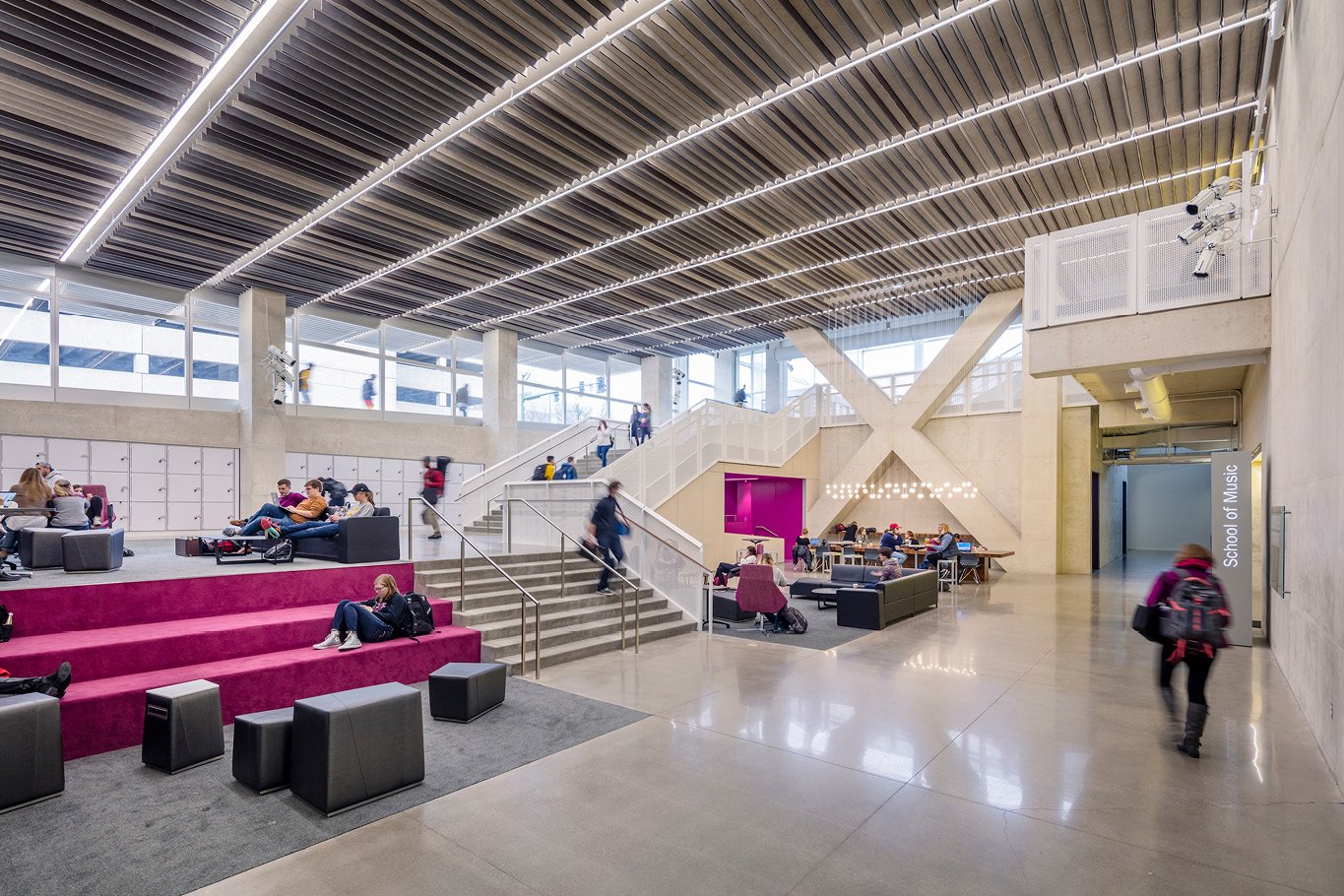
At Voxman, these moments were intentionally weaved into the architecture. A large atrium stitches the building together with daylight, creating a central hub where students gather before rehearsals and decompress afterward. Open lounges and study nooks allow students to discuss ideas, run through a piece with a friend, or simply relax between classes. And in the case that inspiration struck, every space was designed to accommodate impromptu performances.
When considering the needs of your occupants, don’t just think about the utility. A building full of isolated practice rooms may address one need, but keep in mind that people enjoy spaces where they get a variety of experiences. More practice and growth will likely happen in a space where students feel comfortable staying for long periods outside of their work.
Balancing Performance and Community
Music education buildings serve many stakeholders: students, faculty, the broader public. They usually need classrooms for instruction, as well as performance areas which draw in community members, prospective students, and donors.
Voxman’s cantilevered concert hall signals that performance is at the heart of the school, and a prominent public lobby welcomes audiences in for concerts, recitals, and community events. This direct line to the public encourages engagement with the community.
An effective music education building balances the need for concentrated education and acoustic performance with the desire for openness and community connection. It gives performers dignified spaces to share their art while ensuring the building feels approachable to the people it serves.
Designing for Sound and Flexibility
Just like its students, a music education building should perform at the highest technical level. Different instruments produce different decibel levels and frequency ranges, which means a percussion ensemble has a different ideal space than a vocalist or a string quartet.
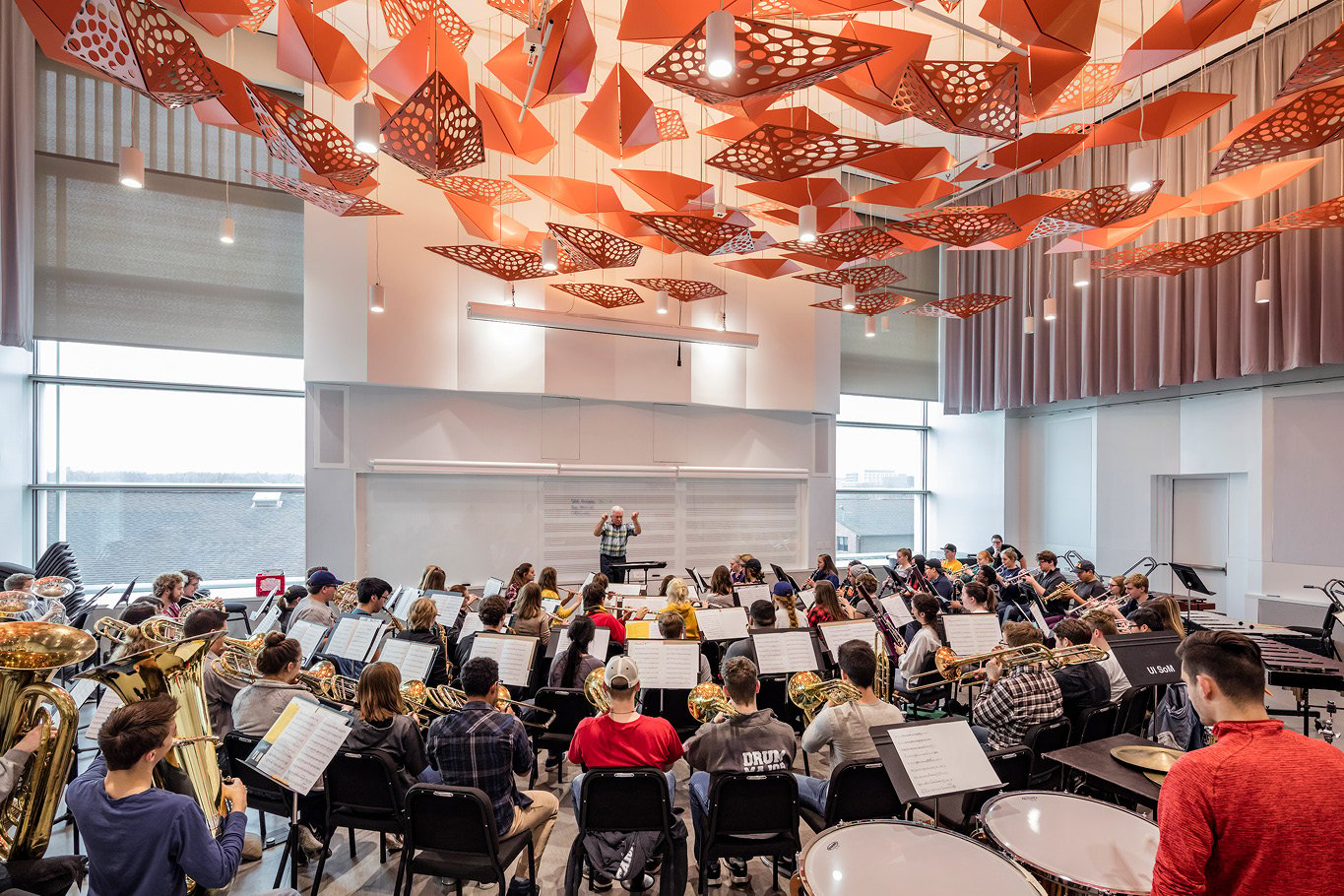
Voxman’s rooms are meticulously engineered to accommodate these differences. Adjustable acoustics allow spaces to adjust to the ensemble size or performance type. Practice rooms are isolated from circulation zones to prevent sound bleed, and rehearsal halls are sized and shaped for the ensembles they serve. Every space also needed to be flexible and easily converted into the right performance space for the needs of the musicians.
As the world of music education evolves, your building must evolve too. Modular systems and future-forward planning ensure the facility will continue to serve several generations of artists. These systems only get put in place when you think ahead about what your facility would need in the future, not what’s needed right now.
Bringing it all Together
A great music education is a well-crafted instrument, and it should support and express the artists who use it. Through intentional use of visioning workshops and open design, you can design a space that rewards artists and the public.
If you’re interested in investing in your music program’s future, schedule a meeting with us. Our architects can walk you through every step of the process to make sure you achieve your vision. And for further reading on the topics discussed in this article, check out our articles on planning flexible interiors and supporting mental health on college campuses through design.