

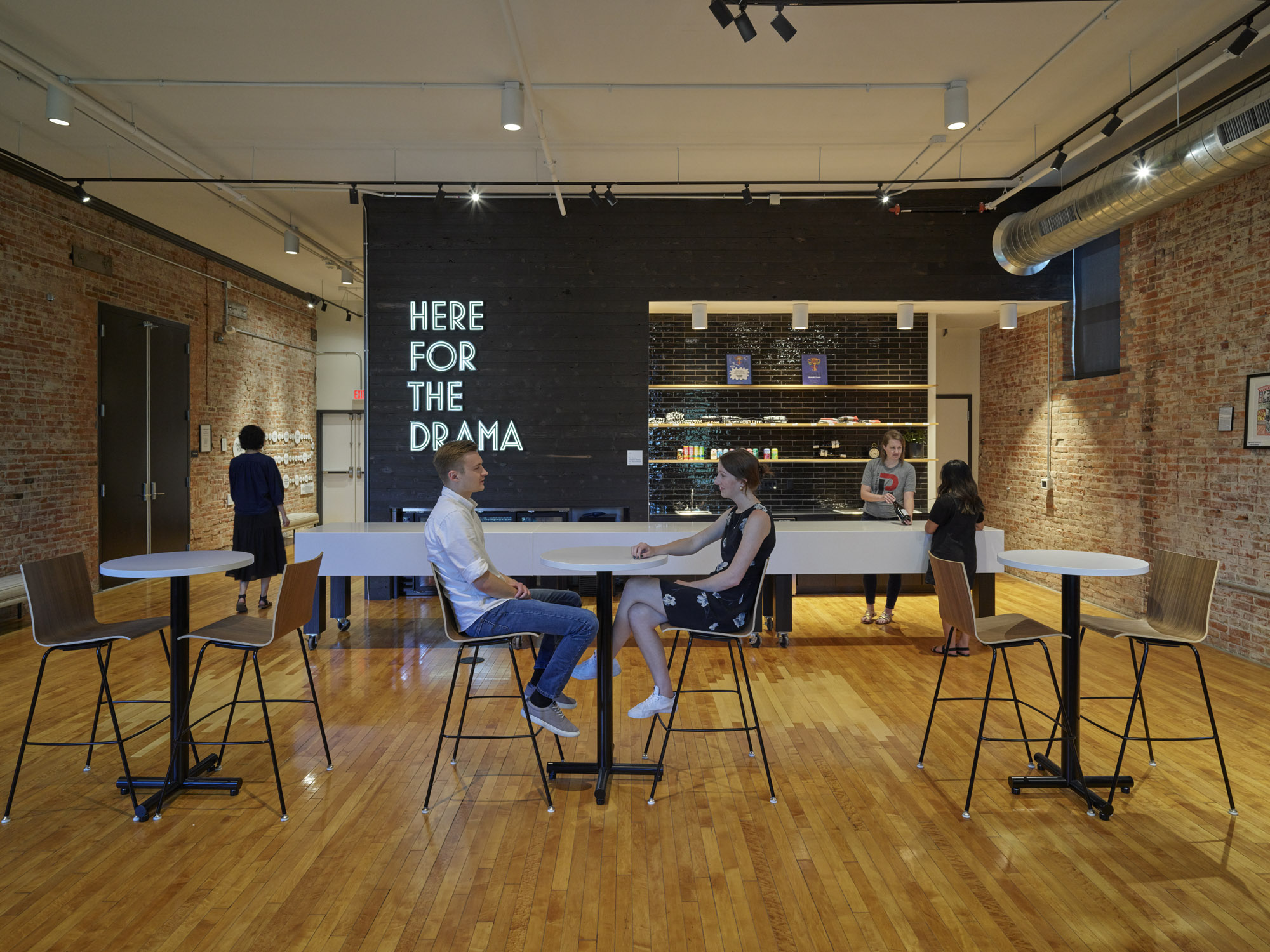
With buildings generating nearly 40% of global carbon emissions, the industry is under increasing pressure to significantly reduce its environmental impact. Adaptive reuse offers an immediate solution to lower these emissions by repurposing buildings that are currently standing. Many clients seek to build responsibly, and by extending the life of existing structures, we move closer to a future with a more vibrant and sustainably occupied building stock.
In the US alone, roughly 6 million buildings encompass about 90 billion square feet of space. Renovating this existing stock rather than building new allows us to lessen our environmental footprint while honoring the history and craftsmanship embedded within these spaces.
At Neumann Monson, we encourage reuse because we understand both the implications of vacant buildings on the community and the carbon impact of building new. It’s more than preservation, it’s about finding ways to salvage important history that fosters a sense of place within our communities.
In this article, we’ll explore the impact of adaptive reuse, including:
- Why is Building Reuse Sustainable?
- Preserving Character and Community in Architecture
- Designing Through Constraints
- The Future of Building is Reuse
Why is Building Reuse Sustainable?
Adaptive reuse is sustainable by design. Reusing a building prevents large amounts of waste from entering landfills and avoids emissions associated with demolition and construction. The greatest carbon savings often come from structural material - masonry, concrete, steel, etc. The structural materials hold much of a building's embodied carbon due to their mass and energy-intensive production processes. This embodied carbon alone is responsible for nearly 11% of global annual emissions.
By retaining as many components of the existing structure as possible, we reduce the demand for new materials and avoid the embodied carbon associated with producing them. Elements such as exterior walls, doors, and windows offer significant opportunities for reuse and should be prioritized whenever feasible. When implementing new structural material is necessary, sustainable alternatives—such as mass timber—can meaningfully lower the environmental impact of the structural materials.

Across our projects, we aim to reduce embodied carbon in every phase. Preserving a building’s frame and foundation dramatically lowers a project’s overall footprint, but the benefits extend beyond sustainability. Reuse also honors the character and history that exist within a building - connecting the past and present through design.
Preserving Character and Community in Architecture
When deciding whether to reuse or build new, it’s often a values-based decision - one rooted in maintaining the character and presence a building had within its community.
For many, adaptive reuse is not only a sustainable choice, but it’s also a way to preserve the cultural and architectural identity that has shaped the space over time.
The saying “they don’t build like they used to” still holds true. Older buildings often showcase craftsmanship, materials, and textures that modern methods can rarely match. Their structure, intricate detailing, and historic elements offer a character that signifies an era and reflects how generations have experienced the space.
Yet, with preservation comes complexity. The Wilkins Building redevelopment in Des Moines, IA, was a project that had limited opportunity for preserving the existing craftsmanship.
After a fire in 2014, the building faced issues such as cracking, spalling, soot deposition, and water damage. Despite these challenges, we were able to recreate some of the detailing with a contemporary approach, honoring the building’s history while embracing its next chapter.

Ultimately, reuse requires thoughtful discernment. If you’re tearing out more than half of an existing building, it’s worth considering if it’s truly a reuse project. Preservation isn’t just about clinging onto the past but rather being able to make decisions that are best for the people the building serves and the identity of its place.
Designing Through Constraints
One of the greatest challenges with adaptive reuse comes when altering the original use of a building. Older structures often present modern issues such as low ceiling heights, post-tensioned concrete that can’t be penetrated, and limited adaptability for new programs. It can even be challenging to create accessible routes and integrate modern HVAC infrastructure without compromising historic plaster or finishes.
However, each challenge that we face in adaptive reuse projects becomes an opportunity for innovation. To meet today’s electrical demands, strategies such as routing electricity behind baseboards accommodate new systems.
Or, for example, at Fort Des Moines, we transformed four army barracks and two horse stables into apartments. The project required balancing preservation with practicality, particularly since the horse stables were originally built with lower-quality brick.

Financial considerations also play a key role. Determining if reusing or building new often depends on budget, scope, and available incentives. Historic tax credits and other funding programs can help offset the costs of reuse projects. It’s a balance between meeting the client's needs while honoring the history of a building.
The Future of Building is Reuse
Every reuse project, at its core, is an act of care. It’s a choice to preserve what’s already meaningful about the building and create space for what’s to come. Thoughtful reuse honors the craftsmanship, materials, and memories embedded in our built environment - while significantly reducing a project’s carbon footprint. When considering whether to build new or reuse, consider the available building stock around you. Not only as a more sustainable option, but also to strengthen the cultural and historical presence of existing buildings in your community.
If you’re exploring a reuse project, learn more about the strategies, challenges, and opportunities that come along with this approach.