

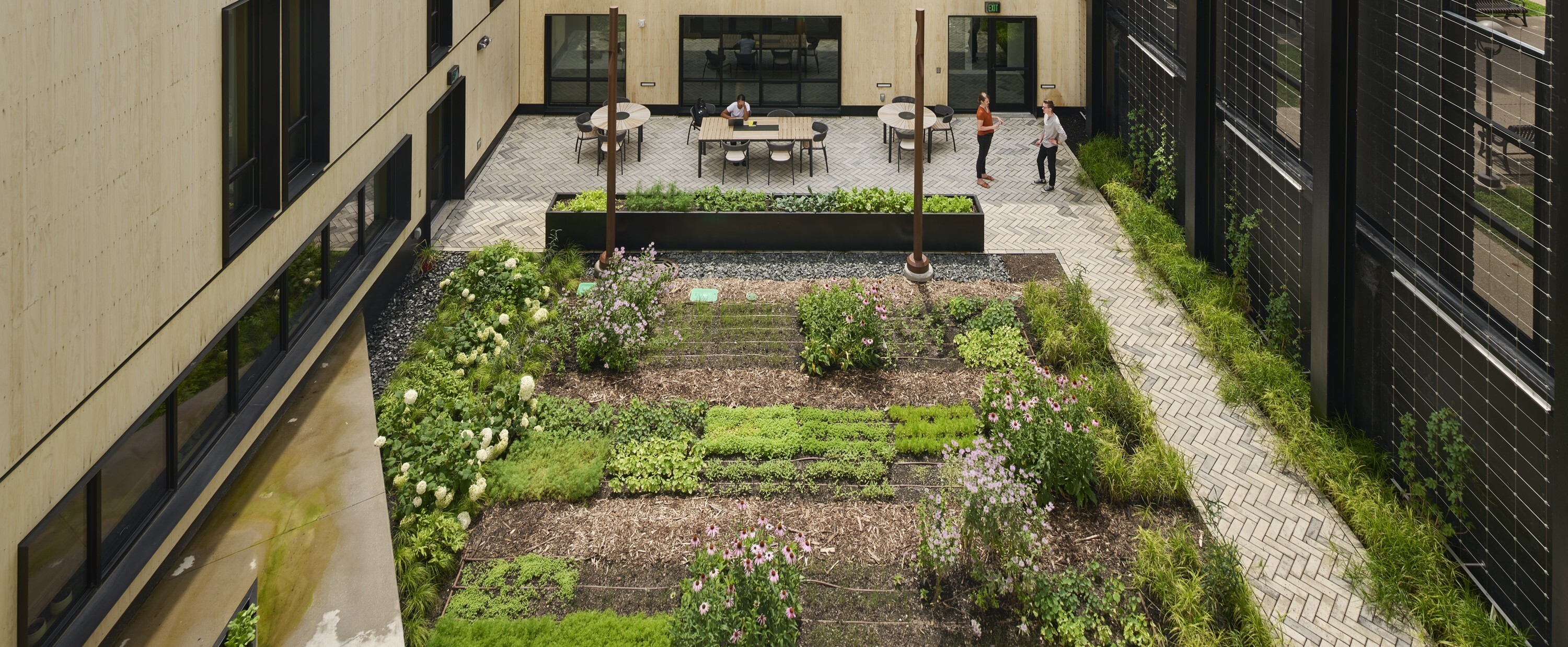
A regenerative community is one that actively improves the health and well-being of people and the environment by restoring and strengthening interdependent systems. Regenerative communities go beyond sustainability by aiming to give back more than they take, creating positive outcomes that allow people, places, and ecosystems to thrive.
Regeneration is closely linked to resilience, which is the ability to adapt to change and recover from significant events. A regenerative community has the resources, skills, and relationships to be resilient, independent, and thriving. It is connected to broader networks and supported by mutually beneficial social, cultural, and ecological systems. These communities call for a holistic approach to the interaction between people and natural systems.
Understanding What Shapes a Community
Every community has a unique story shaped by its history, culture, identity, and geography. A regenerative approach requires an understanding of such characteristics to better identify what a community needs to thrive and strengthen what already exists.

Taking time to understand historical and social context is important because the past informs the present and future. Relationships, culture, policies, economics, and development patterns influence the resources and opportunities available within a community over time. Understanding this context can help communities critically examine and address existing challenges or opportunities to build on what is already present.
A regenerative approach considers these issues as interconnected rather than separate. By understanding how one decision may affect another, communities can create broader and more lasting impact.
The Role of People and Organizations
Local organizations and businesses play an essential role in our communities. At its core, community work is by and for the people, and organizations' involvement is a key component in creating localized, resilient systems. Nonprofits, local businesses, public entities, schools, residents, and neighborhood groups all contribute different knowledge, resources, and skills that help communities function and thrive. By investing in communities and in one another, local organizations and businesses can provide support and resources that seek to strengthen our community as a whole.
These local contributions often overlap and reinforce one another. For example, an organization focused on food access also indirectly supports health, education, and social connection. A conservation group strengthens ecological health while creating opportunities for recreation, education, and community gathering. Collectively, these groups strengthen our communities as part of an interconnected system
Architects and designers have a unique role in relation to communities. At Neumann Monson, we believe Everyone Deserves Better. Our design approach centers on listening and asking questions to understand how people use and experience spaces so that community needs can be addressed. To do so, we work alongside clients, community members, engineers, contractors, and other partners who each bring different expertise to the process.

Even though we as Neumann Monson, or as individuals, may not share all of a community’s characteristics or lived experiences, it is important to approach our work with empathy and openness to others’ perspectives. Doing so helps build trust, which can support stronger relationships and more resilient and regenerative outcomes.
Contributing to a Regenerative Community
Regenerative communities are formed by many contributions over time. As designers and community members, we pay attention to how our projects interact with community culture, and we look for opportunities to support the people and organizations already engaged in regenerative community efforts.
One example of how a Neumann Monson project has contributed to regenerative community is the Weatherdance Stage on the Iowa City Ped Mall. The project exists at the intersection of social connection, nature, transportation, and health. Weatherdance hosts weekly summer concerts with free admission, which have become popular in the community. The stage is set among trees, plantings, and a fountain, demonstrating a strong connection to nature. The site is situated on a pedestrian mall in the middle of town, near public transportation, parking, and bike infrastructure, making it an easy and convenient gathering place where social connections can be nurtured. Weatherdance is one successful example of how architecture can touch multiple community networks.

In addition to our design work in partnership with the community, Neumann Monson will soon begin highlighting local organizations who actively contribute to regenerative communities.
This effort is part of our Sustainability Action Plan and aims to raise awareness of these local organizations and the resources and services they provide. With diverse contributions, these organizations collectively contribute to an interconnected, regenerative community.