

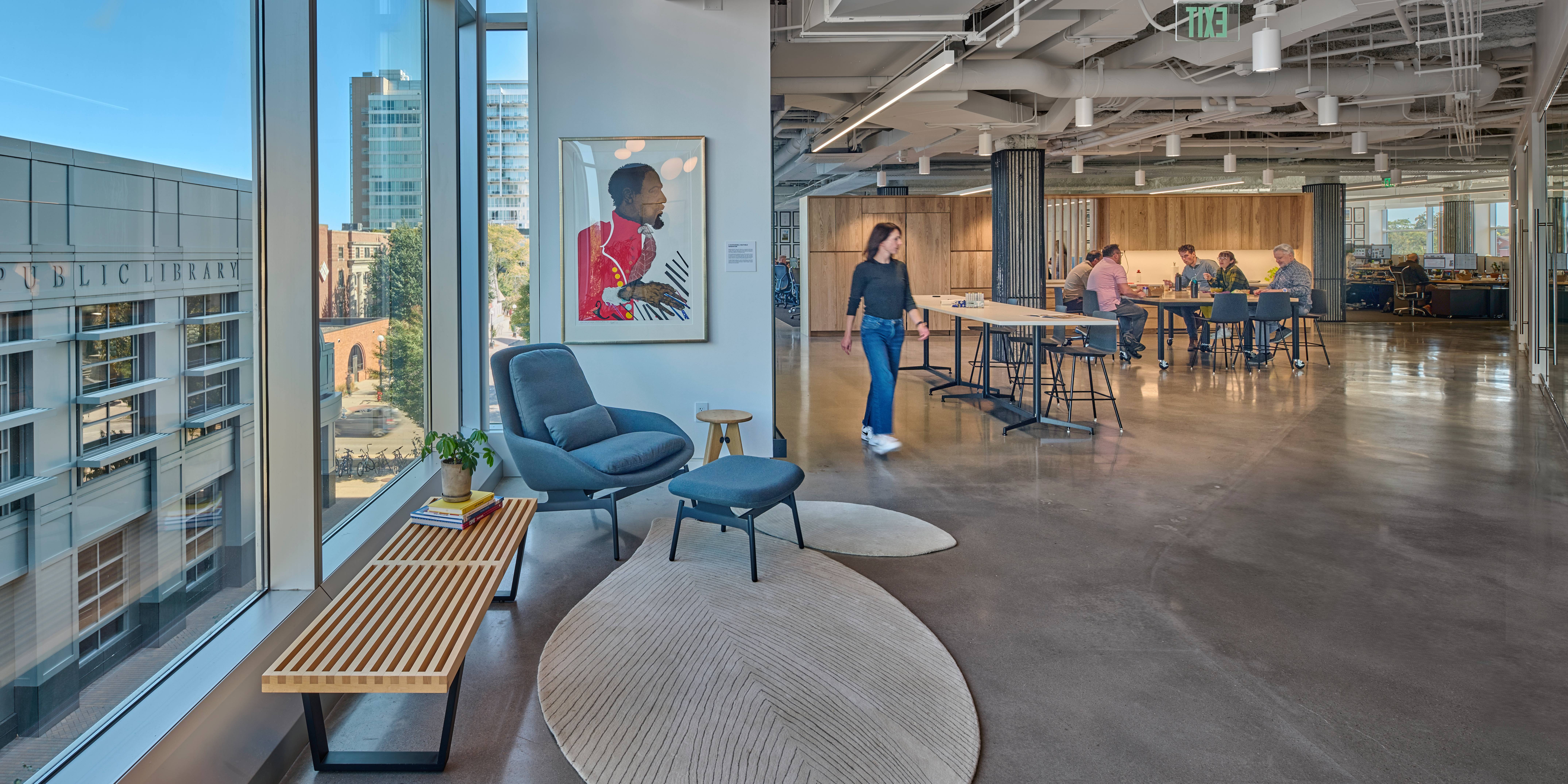
An equitable design meets people where they are, who they are, and how they are to create environments that support a diverse range of experiences. It goes beyond the physical minimum of accessible or inclusive design by underscoring the idea that employees think, move, work, and feel in different ways. When workplaces truly embrace diverse needs, they cultivate environments of choice where employees feel supported and empowered, fueling deeper engagement and greater satisfaction.
Equity is often confused with equality, which focuses on providing the same resources for everyone. Equity, however, strives to provide various types of spaces, equipment, and resources to meet different needs and provide equal outcomes. With needs varying from person to person and from day to day, equitable spaces strive to nurture such ebbs and flows through adaptable, human-centered solutions.
This article outlines the foundations to consider when implementing equity in your workplace design:
- What Equity Means in the Workplace
- How Equity Shapes the Design Process
- The Role of Policy and Culture in Supporting Equitable Design
- Equity as an Investment in People and Culture
What Equity Means in the Workplace
Rather than assuming that everyone benefits from the same arrangement, equitable design acknowledges the varying physical, mental, and social needs that shape how individuals work.
In practice, this means offering flexibility and options for personal choice, welcoming different learning styles, work patterns, and neurological experiences. Equitable design creates an environment that adapts to people, rather than asking people to adapt to it.
Spatially, equitable workplaces offer a multitude of settings and furniture to best support different work needs. Focus rooms, wellness rooms, conference rooms, and other collaboration-type spaces offer options for privacy, restoration, and teamwork. With a variety of options, workplaces can cultivate an environment where people are comfortable and feel supported.
Material and furniture selection play an equally significant role. When selecting materials, it’s important to include a variety of materials and textures that support different sensory needs. For example, consideration of acoustics is key, and choosing natural materials—an expression of Biophilic design—generally inspires a sense of calm. Similarly, a range of furniture materials creates a variety of thermal and tactile experiences.
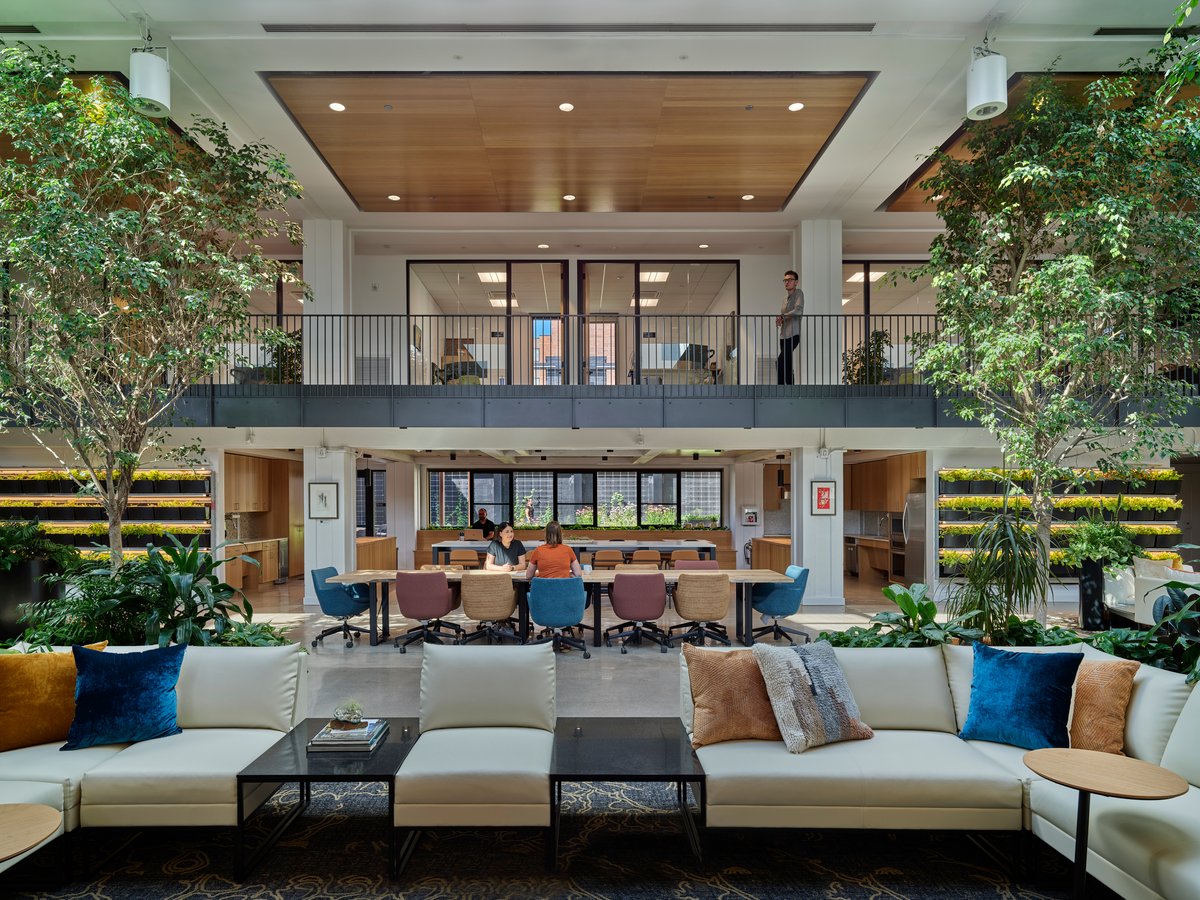


When selecting materials for an equitable design, the design team must also consider the full life-cycle impacts of a product from both social and environmental lenses. For example, these choices must consider the impact on manufacturers, installers, and users.
From a social standpoint, this means evaluating manufacturers’ labor practices, including whether working conditions are fair and just and whether facilities protect surrounding communities by minimizing pollutants.
From an environmental perspective, this involves assessing product ingredients to reduce toxic chemicals while prioritizing materials with low embodied carbon that align with healthy building practices.
These considerations play a dynamic role in how materials, and in turn a workplace, can be truly equitable.
How Equity Shapes the Design Process
Equity doesn’t just shape a design, it shapes the entire design process. Centering equity from the beginning yields improved outcomes by including a variety of voices, regardless of role, title, or experience within an organization. A project valuing equitable outcomes often requires a greater investment of time and effort at the beginning of the design process.
Bringing equity into design starts with intentionally building a diverse decision-making team. Equitable decisions cannot be made in isolation—they require a variety of perspectives to better reflect the needs of those they impact. Practicing empathy is important, as is uplifting each other with the understanding that everyone at the table brings unique and valuable perspectives.

Trust is another foundational element in the design process. For occupants to share honest insight, they must feel that their voice is valued and taken into consideration. Surveys, workshops, and other feedback tools are paired with design team observations to ensure equitable consideration of perspectives.
Developing and analyzing such insights often requires more time spent in the schematic design phase at the beginning of the project. Creating space and time for exploring sensory, experience, and circulation mapping are tangible ways the design team can translate valuable client insight while building trust amongst stakeholders.
The Role of Policy and Culture in Supporting Equitable Design
An equitable workplace doesn’t just come from layout, furniture, and materials, it’s intertwined with policy. Aside from design being used as a tool to support an equitable workplace, an organization’s policies are the true drivers of equity when it comes to culture.
An equitable workplace may offer choice and comfort with regard to architectural and interior design, but without cultural openness and equitable organizational practices, its effectiveness is limited. Two successful frameworks in particular interface with workplace design and culture: the WELL Building Standard and Living Future’s Just Label. Both assist organizations in self-assessing practices and policies to ensure open and responsible workplace cultures.
The benefits of including equitable practices extend beyond happier employees to long-term organizational resilience. By increasing innovation and productivity, both employees and workplaces reap the benefits of equity.
Equity as an Investment in People and Culture
Equity in the workplace is ultimately an investment in the people. By embracing physical manifestations of equitable design and integrating equity into culture, workplaces can create environments that support employees physically, socially, emotionally, and cognitively. It’s an affirmation that individuals have different needs, abilities, and workstyles.
When organizations commit to equity, both in design and in practice, they create workplaces that are more adaptable, more innovative, and more resilient. The result? A culture where people feel valued and supported, and where the workplace becomes a catalyst for engagement, productivity, and long-term success.
Learn more about equitable design strategies that stimulate positive user experiences.