

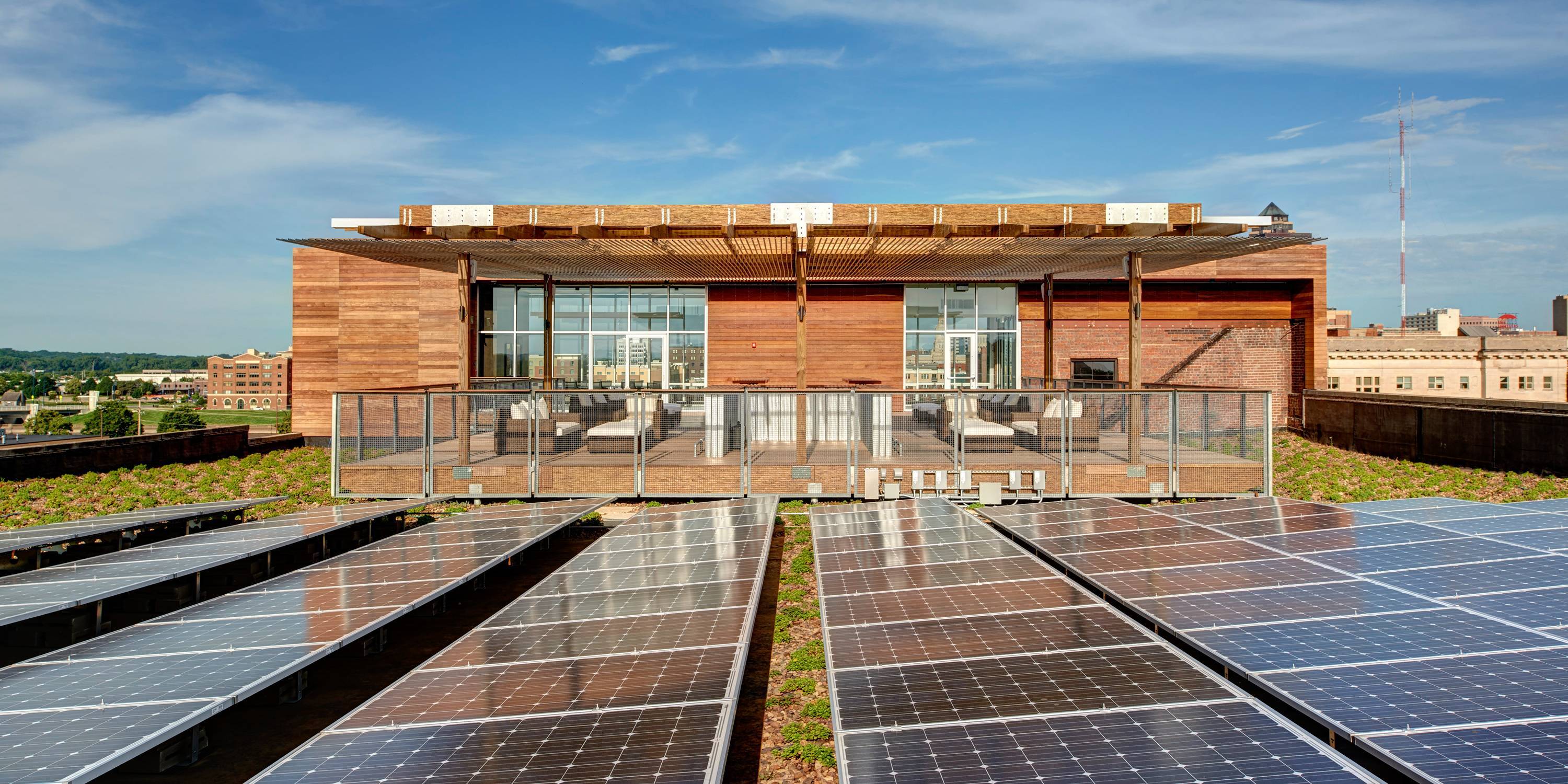
For many, a “sustainable building” still carries the misconception that it’s expensive. The idea comes from focusing only on upfront costs - like renewable energy systems and efficient mechanical designs. This prioritization of upfront costs, however, overlooks the long-term savings these systems generate. It neglects the many low-cost, sustainable strategies that reduce operational expenses over time.
When done well, sustainable design lowers both environmental impact and operating costs. At Neumann Monson, we've built sustainability into every step of our design process, helping teams achieve maximum impact without overspending.
In this article, you will learn:
- How to Design Your Building for Efficiency and Savings
- How to Overcome Barriers to Implementation
- What’s Upcoming in Sustainable Design
- Why Sustainability is an Investment, Not an Expense
How to Design Your Building for Efficiency and Savings
Sustainable design affects nearly every aspect of building performance. When implemented strategically, it leads to measurable financial savings. While most design decisions contribute to some type of efficiency, some have a greater financial impact than others.
1. How does Sustainable Design Impact Energy and Mechanical Systems?
Energy and mechanical systems typically have the largest impact on operating costs. Efficient building systems - especially those using renewable or electrified energy sources - can dramatically reduce daily expenses. For example, a ground-source geothermal heat pump system may have higher upfront costs than your typical building heating and cooling system, but being located underground means they have lower risks and longer lifespans, while also improving energy efficiency. This results in significant long-term savings.
2. Why does a Building Envelope’s Performance Matter?
The building envelope - the roof, walls, and windows that separate conditioned and unconditioned space - is a key design strategy for operational efficiency. A well-insulated, airtight envelope lowers heating and cooling demand and improves system efficiency, with residential applications demonstrating average energy cost reductions of 15%.
3. How does Material Selection Reduce Costs Over Time?
Beyond energy and building envelopes, material choices also dictate how a building performs. Over time, materials weather and require maintenance or replacement. Selecting durable, low-maintenance options helps reduce those costs. On all of our projects, for example, we no longer use vinyl composite tile flooring. It requires annual refinishing and releases toxic volatile organic compounds (VOCs). Similarly, our projects at the Stanley Center for Peace and Security and the Unitarian Universalist Society feature siding that requires minimal maintenance - charred accoya wood siding and bleached oil-treated wood siding.

4. Designing for Comfort
Operational efficiency can also be influenced by occupant comfort. When building occupants are uncomfortable, they tend to adjust thermostats or use personal heaters or fans. This increases a building’s energy demand, also increasing operational costs. By prioritizing thermal comfort and natural ventilation, buildings can maintain consistent temperature setpoints while reducing operational costs.
Although some sustainable design choices may increase upfront costs, their energy savings typically deliver payback within 5-7 years. These strategies also improve occupant comfort and satisfaction, yielding benefits throughout the lifespan of the building. It’s not only about sustainability, but it’s also about reducing overall lifecycle costs.
How to Overcome Barriers to Implementation
Despite sustainability being used as a financial strategy, sustainable design choices are often underutilized. The initial costs tend to overshadow the long-term value these systems provide. Budget-driven structures often reinforce this short-term thinking. When operational and capital budgets are separate, decision-makers typically prioritize reducing those upfront costs over lower lifetime costs.
Changing this mindset begins with reframing sustainability as an investment. Risk assessments, for example, reveal how a building may hold up in the event of a natural disaster.
As climate-related events become more frequent, it’s a safer investment to build resilient buildings that are more resistant to these events. Especially when you consider rising insurance rates, which are pushing owners to invest in more resilient design strategies. The Lone Tree Wellness Center, for example, takes these events into account with its hardened precast concrete.

Alternative financing opportunities can also balance upfront costs for sustainable design strategies. Resources such as Power Purchase Agreements (PPAs) help building owners save on their monthly utility costs without having to pay upfront for the solar panels and infrastructure themselves. Additionally, grants, utility incentives, and rebate programs can ease initial costs - resources that many nonprofits and government entities have successfully utilized to achieve their sustainable design goals.
What’s Upcoming in Sustainable Design
The future of sustainability in the building sector blends innovation with simplicity. On the technological side, sensor-based systems are advancing temperature controls. These monitor occupant comfort, optimizing energy use accordingly. Improvements in renewable energy storage technology are also driving cost reduction and resiliency, accelerating the journey towards electrification and reduced grid dependence.
At the same time, movements like SHIFT look to the global south for inspiration. They revive climate-driven strategies that have been around for centuries. Even the growth in bio-based and traditional, natural materials are furthering this sustainability movement in the built environment.
Why Sustainability is an Investment, Not an Expense
Sustainable design is a financial strategy that enables the creation of more resilient buildings that are built to last. It’s not so much about the upfront costs of sustainable design, but rather the long-term savings that these choices deliver.
Through thoughtful material choices, renewable energy systems, and efficient design, sustainability transforms from an added expense into an investment that pays for itself. Ultimately, sustainability isn’t an add-on, it’s the foundation of smarter, more prosperous buildings.
Now that you understand why and how sustainable design strategies can reduce costs, let’s take a look at how to determine if investing in solar panels is the right strategy for you.