

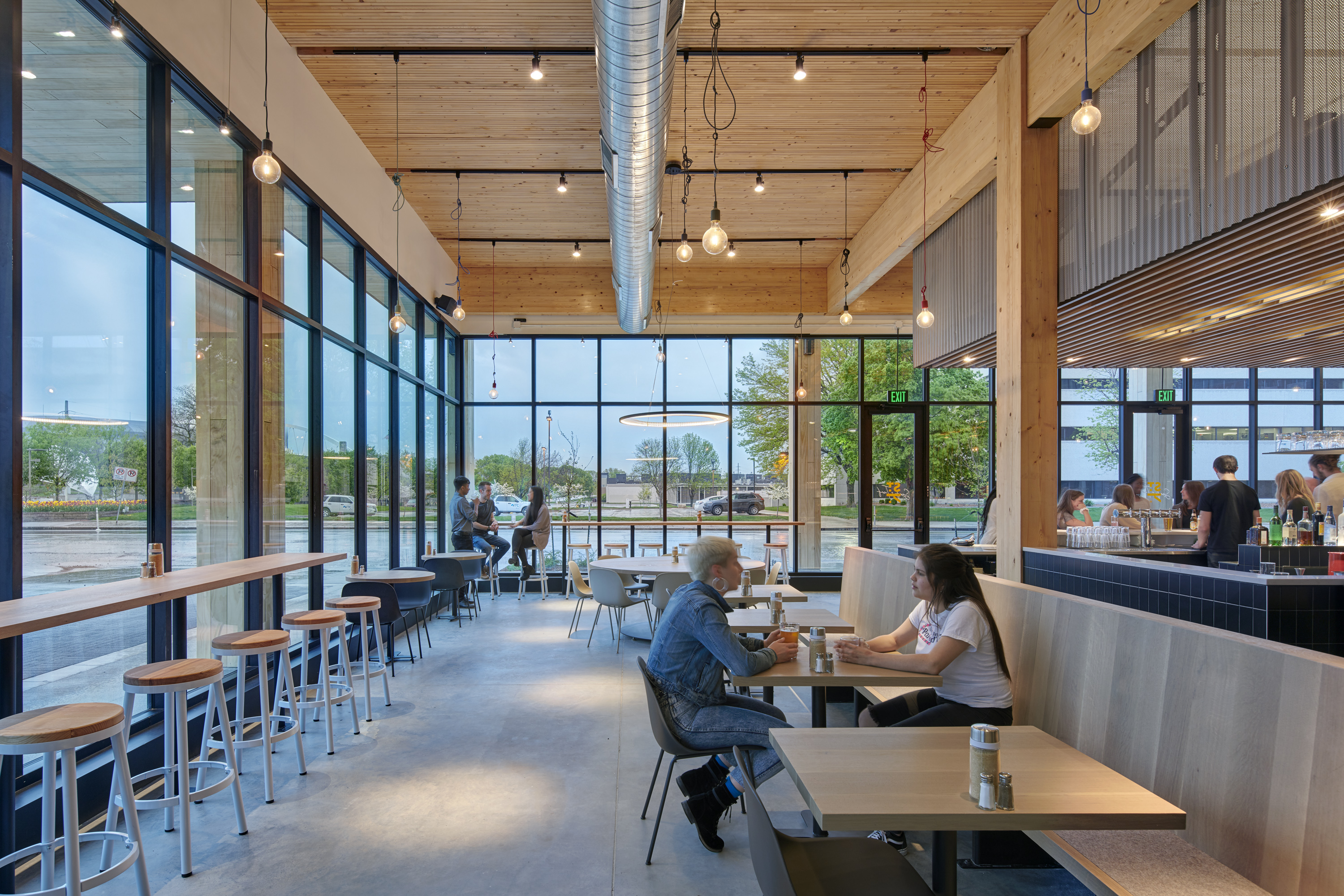
Sustainable Material Selection begins with understanding a client's goals and values. Those priorities shape the design and help determine which materials are the right fit for their project.
While some clients come into a project already knowing that the health of people and the planet are top priorities, others are simply looking for durable and cost-effective solutions and may not realize that these goals can also be achieved through sustainable and healthy strategies.
Once the design team understands a client's priorities, then material selection can truly begin. Architects and interior designers guide clients through the selection and sourcing process, helping them select materials that align their goals with healthy, durable, and high-performing spaces.
This article explores some key considerations to make when sourcing sustainable materials:
- What Makes a Material Sustainable?
- What Materials are Sustainable?
- Are Sustainable Materials Always More Sustainable?
- What are Challenges with Sustainable Materials?
What Makes a Material Sustainable?
When thinking about sustainable materials, it’s important to account for a variety of factors that a material may influence.
The first consideration is a material's environmental impact, from the extraction of a raw material to the emissions from transporting the material to a building site. Next, your design team will consider the social impacts of a material to evaluate the product manufacturer and understand if their labor practices are fair and just for their employees. Another important consideration is human health. Your designer will research the ingredients included in the material to prioritize non-toxic chemicals. These three categories work in tandem to make a material sustainable.

To help outline this information on a product, there are helpful resources such as transparency documents that a manufacturer may include to share the social, environmental, or health impacts of their product. A few of these documents are Health Product Declarations (HPDs), Environmental Product Declarations (EPDs), Cradle to Cradle, and Declare Labels. All of these documents provide open disclosure of things like chemicals and life-cycle processes. If this is a priority, a project team may decide that a certain percentage of products specified need to have such documentation.
What Materials are Sustainable?
Starting with a building’s structure may be appropriate if reducing the embodied carbon of a project is important to the client. Because a building's structure accounts for a high percentage of its carbon footprint, the project team may consider a low-carbon option such as mass timber. Mass timber stores carbon, whereas other structural materials like concrete and steel have a high embodied carbon due to their extraction process and high heat production requirements.
Other natural materials such as wood, cork, wool, stone, and clay/terracotta are other sustainable options. These materials are chemical-free and biodegradable. More materials that your designer may consider in your building project are carpet that uses a high percentage of recycled nylon and PVC backing, linoleum flooring, other bio-based products, any materials with closed-loop water systems, and recycled or reclaimed materials.

In addition to acquiring new sustainable materials, it can be more sustainable to reuse a material and develop a materials strategy that focuses on recycled, upcycled, and reclaimed products. This method both strengthens a project’s story while contributing to lower embodied carbon for the project overall, both of which are high-impact outcomes.
Are Sustainable Materials Always More Expensive?
Sustainable Materials aren’t necessarily always more expensive. Some sustainable materials cost more upfront, while others can be competitive or less expensive than conventional options. When selecting materials, it’s important to evaluate materials based on their full lifecycle cost, not just their purchase price. For example, designers will consider the durability and cost to replace a material, in addition to its upfront cost. Therefore, the more sustainable material with a higher upfront cost may actually cost less over the lifetime of the building.
Despite the lower lifecycle costs, architects and designers have been, and continue to, push for the industry to offer more sustainable options that are cost-effective. The industry trends are showing the results of that with a plethora of options that are lower cost than they were 10-20 years ago, making sustainable buildings more attainable now than they ever have been.
What are Challenges with Sustainable Materials?
Accessibility to sustainable materials can often be a challenge, whether it’s affordability or finding sustainable material options. For example, mass timber still carries a premium in most structural applications, often leaving project teams to select between much less sustainable choices such as concrete and steel. Nonetheless, options like locally sourcing or concrete add-ins, like fly ash, can even make these material selections far more sustainable.
Additionally, discerning which products are truly sustainable can sometimes be challenging and time-consuming. Understanding if materials are being manufactured healthily and aren’t only applying green labels requires diligent research from the design team. However, websites like Ecomedes that outline some of this information make this process a little easier.
Our Hope for the Future of Sustainable Materials
As the demand for sustainability within the built environment continues to grow, we hope to see continued investment in local circular systems for building materials. In Iowa, organizations are already working to divert demolition waste into new projects, but there is still significant opportunity to expand these efforts. Those of us working in the industry are pushing for more effort and accountability to help scale up circular systems locally and across the country. With no one solution, every project has an opportunity to make intentional choices that better support products that prioritize the health of people and the planet.

To learn more about sustainable materials, consider reading about urban lumber and how it was included in the renovation of our Iowa City Studio using locally sourced and salvaged solid ash lumber.